韋斯特曼:特朗普只會加速美國霸權衰落,任何外國都不應干預巴西內政-古斯塔沃·韋斯特曼
guancha
當地時間7月6日至7日,金磚國家領導人第十七次會晤在巴西里約熱內盧舉行並達成了重要宣言。不久後,對金磚國家組織耿耿於懷的美國總統特朗普宣佈將對巴西加徵50%的關税,自8月1日起生效。
巴西如何看待特朗普的新一輪“關税大棒”?中巴合作的發展潛力在何方?面對矛盾日益突出的世界,金磚國家組織可以發揮怎樣的作用?巴西如何發揮自身作為國際調解者角色的獨特優勢?
就相關話題,“北京對話”與巴西總統府國際事務特別顧問辦公室主任古斯塔沃·韋斯特曼交流,帶來他的分享。
【文/古斯塔沃·韋斯特曼,對話/李澤西】
**觀察者網:**從8月1日起,巴西將面臨美國徵收的50%關税。美國總統特朗普稱,此舉部分動機源於對前總統博索納羅的起訴。昨天,盧拉總統簽署了一項貿易對等法,我們很快將看到細則。除此之外,巴西還採取了哪些舉措來反擊或抵抗美國這種突如其來的貿易攻勢?
**韋斯特曼:**嗯,這是個非常複雜的問題,但我認為重點不在於反擊,而在於糾偏。特朗普的這些單邊制裁或措施完全不符合當前的全球秩序。
首先,我們談論的是一個主權國家,一個擁有強大民主傳統和獨立自主法律體系的主權國家。我們起訴前總統博索納羅是因為他企圖發動政變。考慮到巴西遵循的民主程序,任何外國都不應試圖干預這一進程。這是第一點。
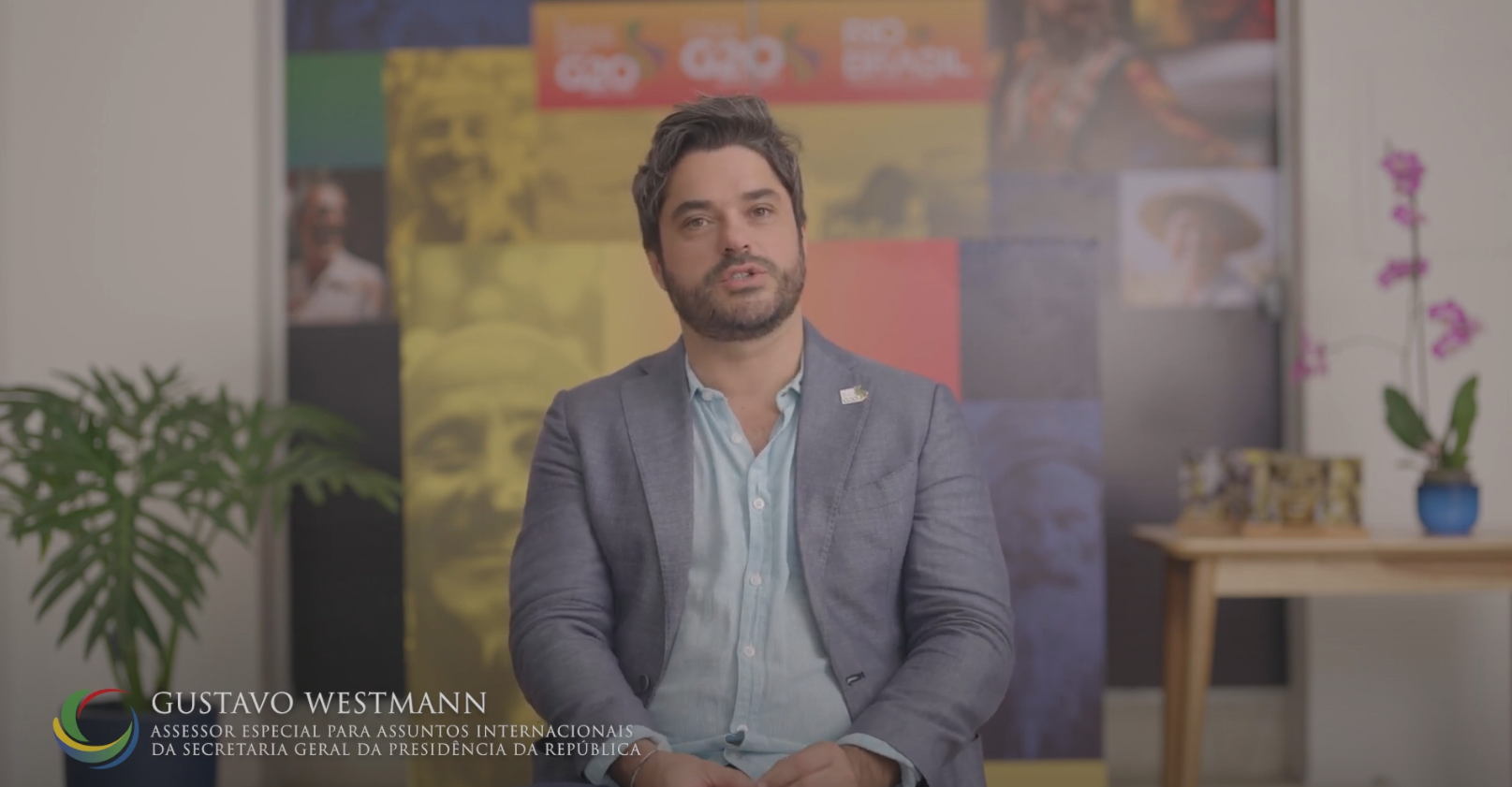
巴西總統府國際事務特別顧問辦公室主任古斯塔沃·韋斯特曼
其次,巴西的一貫立場是通過外交途徑談判,努力為各類爭端尋找解決方案。但在這種情況下,我們已準備好採取對等措施,核心就是在巴西對美國產品徵收對等關税。
更重要的是,着眼於中長期,我們要啓動或加強合作伙伴多元化的戰略。在這方面,比如中國,就扮演着非常特殊的角色。我認為特朗普的關税只會加速美國霸權不可避免的衰落進程。我們還會將此案提交給負責處理此類事務的多邊機構,如世界貿易組織(WTO),以及其他在全球範圍內被認可其調解角色或承擔全球事務評估職能的機構。這就是我們正在做的事情,我們對此非常冷靜。我認為這完全是出於政治動機,任何外國都不應干涉我們的內部事務。這就是我們的評估。
**觀察者網:**您提到巴西的心態未必是反擊,更多是糾偏。順着這個思路,盧拉總統的初步回應,我引述原話是:“特朗普本可以打電話(溝通),卻把關税消息發到自己的網站上——這是他對所有人都缺乏尊重的典型行為。”那麼,首先,您是否認為缺乏尊重是主要的問題?我感覺這番話表明巴西的第一反應確實是試圖尋找出路。同樣,副總統最近也提到給美國提出了一項貿易提議,但美方尚未回應。所以,巴西是這麼考慮的嗎?
**韋斯特曼:**這就是關鍵問題。特朗普的行為模式讓他……我深信在未來的歷史書上,他會被記錄為美國最愚蠢的領導人之一。這點我非常有把握,因為他不僅傷害世界,也在傷害美國自身。
我們正努力冷靜應對,因為處理外交政策時——當然總是會帶有情緒——但我們必須理性並着眼長遠。我認為這裏討論的是一個外國領導人試圖干預我們遵循法定訴訟程序的國內事務。這才是最核心的問題。他宣佈的和口頭説的一切,很大程度上都是為了影響針對巴西前總統博索納羅的訴訟程序,而博索納羅確實曾企圖領導一場暗殺——目標包括盧拉總統、阿爾克明副總統和最高法院大法官亞歷山大·德·莫拉埃斯(Alexandre de Moraes)——在內的政變。這才是問題的實質。我們非常明確:沒有任何國家能影響司法進程,任何威脅都不會影響此類程序。但我們也非常清楚美國的實力、其重要性以及對巴西經濟的相關性。
所以我認為,現在當然要批評、當然要反制、當然要表達對他所作所為的不滿,但同時也要對話,嘗試尋求解決方案並明確告知對方。如果無法通過對話找到解決方案,那麼所有反制措施都將付諸實施,事情就會這樣發展下去。

當地時間7月10日,巴西聖保羅民眾舉行示威活動,抗議特朗普宣佈對巴西征收關税。 視覺中國
**觀察者網:**顯然,巴西並非唯一被加徵關税的國家。除了此前所謂“解放日”關税政策延續下來的普遍關税外,特朗普還威脅對所有金磚國家徵收10%關税,或者説,基本上任何與金磚國家結盟的國家。您認為這種威脅會以任何方式奏效嗎?比如,阻止一些潛在夥伴與金磚國家合作,或者削弱金磚國家的團結?還是説,它反而會產生激勵金磚國家的相反效果?
**韋斯特曼:**首先,如果這件事讓他(特朗普)感到如此在意,那恰恰説明金磚國家的影響力正在上升,對吧?這是件好事,值得慶賀。金磚國家本身就是作為現行全球秩序的替代方案而創立的,我們正在成功構建這個新秩序。這是第一點。如果美國如此不爽,那就證明金磚在發揮作用。這很好,值得慶祝。
關於關税威脅,首先,很難判斷他所説的是否當真。特朗普自上任以來就多次做出承諾然後反悔,反覆無常。所以我們並不清楚他的真實意圖。這一點值得深思。我絕對不認為這會給金磚國家組織帶來負面影響。相反,我非常有信心,我們將加強金磚國家之間在商業乃至政治上的聯繫。通過這樣做,我堅信會吸引其他國家和合作夥伴的關注,促使他們也尋求合作伙伴多元化,並將金磚國家組織視為一個良好的起點。所以實際上,到頭來這會是件好事,恰恰反映了金磚在當前全球秩序中的實力。
**觀察者網:**還有一些報道稱,里約熱內盧的市長希望在該市設立金磚國家組織總部。這個報道讓人聯想到關於金磚機制化的一些討論。有人非常支持設立總部來推進金磚的發展,賦予其一套組織結構;也有人擔心這可能導致機構官僚化、效率降低,並可能使其更加僵化。暫且不談總部選址的問題,您對於是否應該設立金磚總部持什麼觀點?
**韋斯特曼:**我認為距離討論設立金磚總部還為時過早。我們目前正在討論的是該集團的機制完善,這涉及到新成員、新角色等許多議題的討論,但距離設立常設機構、創建秘書處或常設秘書處還非常遙遠;坦率地説,這必須由所有成員國共同商議決定。我認為目前並非最佳的時機,而且重申一遍,我們距離那一步還很遠。
這很難説。我認為還非常遙遠。目前任何關於設立常設秘書處的説法都只是猜測。成員們甚至還沒決定下一任主席國如何輪值,更別説一個常設秘書處要如何運作了。我現在不想深入討論這個問題,但這確實是未來幾年需要各方冷靜討論、逐步推進的議題之一。
**觀察者網:**回顧里約的金磚領導人峯會及其前後活動,從巴西的角度看,您認為最大的成果是什麼?另一方面,又有哪些遺憾或需要進一步努力的地方?
**韋斯特曼:**應該説當前的全球背景極其複雜;因此我認為,金磚峯會能達成一份領導人宣言和另外三份宣言——分別涉及人工智能、資助應對氣候變化以及衞生領域——本身就反映了金磚國家付出的巨大努力和堅定承諾。這是一場勝利,不容否認。所以,能將金磚議程置於全球視野並取得具體成果,這絕對是值得慶賀的。
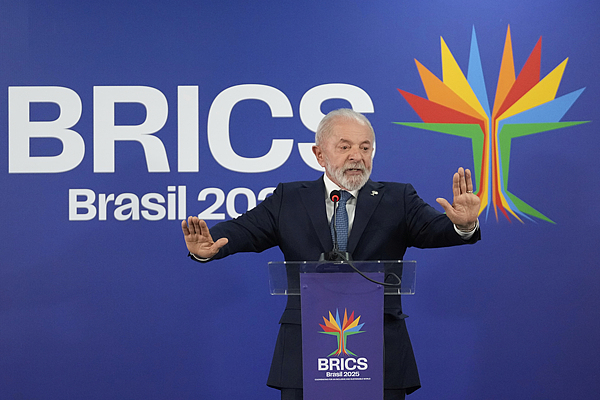
2025年7月7日,巴西里約熱內盧,巴西總統盧拉在第17屆金磚國家峯會新聞發佈會上講話。 視覺中國
從我個人角度看,有點令人失望的是什麼?當然,我們總是期望或尋求更大的抱負,對吧?所以我非常希望能看到一份更具雄心的宣言,帶來更多成果,並譴責例如以色列在巴勒斯坦的襲擊等許多其他問題。
但我們不應忘記,金磚的決策是基於共識做出的。因此我們必須共同努力推進這些議題。不過總體而言,我認為峯會還是不錯的,相當積極。
**觀察者網:**轉向巴中關係,最近討論的一個話題是修建一條連接秘魯錢凱港(Chancay)與巴西東海岸港口的鐵路的可能性。目前看來,似乎還只是可行性研究的起步階段。從您的角度看,尤其是從經濟角度,這個項目的可行性如何?
**韋斯特曼:**嗯,我對這個項目的具體細節確實不太清楚,但可以談談對這些變量相互組合的看法。
首先,我認為巴中關係已經取得了長足進步。現在的挑戰在於提升關係的質量。我們的雙邊貿易額巨大,但我們仍然缺乏高科技產品,或者説需要提升貿易附加值,尤其是巴西方面。我認為我們還需要在戰略層面加強協作,而近年來這方面也在不斷改善。我們需要推動兩國社會、科技園區和大學的交流融合,這方面仍有待加強。
在巴西領土上建設由中國出資或採用中國技術的鐵路,這個構想聽起來很棒。巴西的地理條件非常適合鐵路運輸。在上世紀60年代,我們做出了錯誤的選擇,優先發展了公路交通和汽車,時至今日我們仍在為這個糟糕的決定付出代價。巴西擁有發展鐵路的絕佳地理條件,然而我們卻只有公路,鐵路網絡非常薄弱。
因此,我相信,只要遵循所有相關法律程序,如果中企競標勝出或成為該項目的主要合作伙伴,這將會進一步增強我們的雙邊關係。所以這是一件好事,是我們(政府)應該鼓勵和支持的事情。巴中有必要更緊密合作,這一點已變得非常清晰。
**觀察者網:**您談到了促進雙方人員交流。今年5月盧拉總統訪華時,中國向包括巴西在內的多個國家試行了免簽入境政策。巴西通常實行簽證對等原則,即任何給予巴西免籤待遇的國家,巴西也會給予對方同等待遇;反之亦然。鑑於這一點,我們或許可以預期巴西很快也會向中國公民提供免簽入境待遇,但這在金磚峯會前顯然尚未實現,那麼我們何時可以期待此事落實?
**韋斯特曼:**嗯,這是一個更復雜的議題,由我們外交部的同事負責。這肯定在我們的考慮範圍內,我們一直在討論此事,我認為會實現的,只是需要確定時間;我預計很快會實現,但這事要複雜得多。別忘了中國有14億人口。因此這不是一個能輕易做出的決定,它涉及諸多變量,必須謹慎對待。但沒錯,這完全在我們的考慮範圍內,讓我們拭目以待。我們應該持續關注此事。
**觀察者網:**關於巴西整體的對外戰略,我最近聽您在一次會議上的發言提到,巴西的一大國際議程是促成對立各方坐下來對話談判,尤其是解決衝突。當然,並非只有巴西採取這種定位。印度在談論這點,土耳其也在談論這點。阿聯酋、沙特阿拉伯,甚至特朗普治下的美國(儘管特朗普參與了打擊伊朗的行動),也把自己定位為以色列和伊朗之間的某種和平調解人。中國也在中東推動了一些和解協議。考慮到這麼多國家都有意充當談判者或調解人,巴西有什麼特別之處,使其成為談判解決衝突的良好夥伴?或許您能談談巴西在烏克蘭和平提案方面的進展,以及您提到希望看到譴責以色列在加沙戰爭的聲明,巴西是否也在嘗試推動該地區的和平?
**韋斯特曼:**嗯,在回答之前,讓我們停下來想一想。在當今如此兩極分化的世界裏,哪些國家有能力調解衝突或將不同意見匯聚一堂?實際上非常少。而巴西無疑會是所有人首先想到的國家之一。為什麼呢?
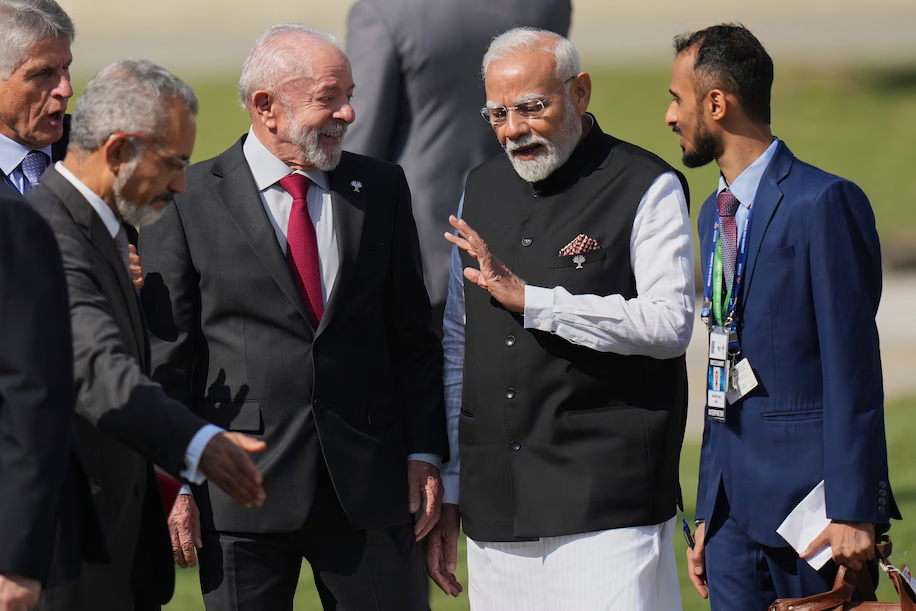
當地時間7月6日,印度總理莫迪與巴西總統盧拉在金磚國家峯會上交談。 美聯社
巴西擁有和平解決衝突的偉大傳統。我們沒有戰爭,沒有敵人,我們與鄰國和平相處。巴西自聯合國成立之初就是其成員。巴西一貫將自己定位為對話與和解的力量。盧拉總統的領導力(他無疑是當今最偉大的領導人或政治家之一)也對此有貢獻,他來自人民,並理解人民。我認為所有這些因素——還包括地區領導力、經濟體量、人口規模——都使巴西成為一個值得信賴的國家。當然,我們有自己的問題,但談到重大問題時,巴西絕對是一個值得信賴的國家。
你提到的其他幾個國家當然也極其重要。但例如印度,我在印度生活過,印度與中國存在問題,你們之間的間接衝突已持續了相當一段時間;印度與巴基斯坦也存在矛盾。你提到的沙特阿拉伯與一些鄰國存在嚴重的問題,包括其他一些國家,比如阿聯酋,如此小的國家,儘管非常富有,但他們在領導力和調解能力方面能帶來什麼樣的公信力?我並非在説這些國家的壞話,絕對不是。我認為任何願意為當前衝突尋求和平解決方案的國家都在為此做貢獻。但我非常有信心,巴西在這方面能發揮戰略性作用。
話雖如此,這也取決於衝突本身或衝突各方是否接受試圖調解的國家的合法性。我們要説的是,我們已準備好提供支持,正如我們已在地區層面乃至世界其他地區衝突中所做的那樣。當然,這取決於這些國家是否接受我們的支持和提議。
巴西和中國一直在認真致力於為烏克蘭戰爭尋求和平解決方案。我們一直在此事上合作,儘管迄今為止尚未取得重大進展。我們在紐約的常駐聯合國代表之間持續進行討論,事情正在推進。
關於以色列的戰爭,情況則更為複雜,因為我們理解這是以色列在巴勒斯坦實施的一場明顯的種族滅絕,這使局勢更加困難。我們並非支持或反對哪一方,而是譴責那裏正在發生的事情。這是一場明確的衝突,一次明顯的種族滅絕企圖,這在任何情況下都不應被接受。這就是巴西的立場,我相信我們有很好的條件做出貢獻,但這當然也取決於衝突各方。
**觀察者網:**您提到與中國合作推動在烏克蘭實現和平。巴西是否也在與現任美國政府合作?至少直到最近,美國似乎也相當支持該衝突的和平進程。
**韋斯特曼:**並沒有。目前,由於顯而易見的原因,我們與美國的關係並非最佳。而美國的自我定位是極其專斷的,儘管它是一個民主國家。因此,他們在尋求解決當前衝突的合作伙伴方面,並未真正與其他國家進行對話。我們只是在關注事態發展,但在這些進程中我們並未與美國密切合作。
**觀察者網:**您提到之前曾在巴西駐印度大使館貿易處工作。顯然,是直接參與構建連接金磚國家的紐帶。能否談談這段經歷,描述一下您做了什麼?
**韋斯特曼:**我認為這段經歷給我帶來的主要收穫,特別是對金磚國家的思考,是有機會理解印度這個國家。我認為通過在印度生活——而且我已經去過中國很多很多次——通過旅行、瞭解、訪問、略微理解它們的社會,才能更好地理解金磚國家為何有意義,以及我們如何才能真正開展合作。對很多人來説,這仍然很遙遠。以你為例,你剛來巴西,所以你看,儘管存在差異,但你也看到了我們國家之間關係的潛力和合作前景。
在印度,讓我印象深刻的一點——這也是金磚國家的基石之一——是你看到世界在變化,發展在進行中;在中國也一樣,如果你離開上海幾年再回去,城市景觀已然不同,因為進步在持續。這是你在歐洲看不到的,在美國也看不到,尤其是歐洲,那是舊的——並非不好,只是舊了。金磚國家是新的,是進步,是變革,是世界經濟的新中心,因此也將在未來的政治現實中佔據核心地位。所以,我認為這就是我在巴西駐印度大使館貿易處工作經歷中最大的收穫。

當地時間7月6日,金磚國家領導人第十七次會晤在巴西里約熱內盧正式開幕。 彭博社
**觀察者網:**您首先提出了一個問題:金磚國家何以有意義?根據回答,我推測您的答案是,所有金磚國家的共同點在於這種進步感和變革感。這意味着什麼?這種進步的涵義是什麼?對彼此合作意味着什麼?對金磚議程意味着什麼?對金磚作為一個組織又意味着什麼?
**韋斯特曼:**首先,這些國家正從內部改變世界。世界的新中產階級正來自這些國家,技術和進步正來自這些國家,所以在金磚國家內部正發生着很多事情。這意味着這些國家作為貿易伙伴、政治夥伴、經濟和金融夥伴、文化盟友的潛力將會增長。在我看來,這一點很重要,如果你縱觀歷史數據,往往是經濟先開始騰飛,隨後政治和軟實力影響力的增長才接踵而至。
因此,我們目前仍處於——當然主要是由中國引領,也包括印度、巴西、俄羅斯、南非——如果我們考慮到這些國家將是未來幾十年、乃至幾個世紀內的世界經濟增長引擎,你就必須承認,隨之而來的是,他們也將在政治、金融上引領世界。而通過現在就開始合作,我認為當那一刻到來時——當最終建立一個更公正、公平的國際秩序的時刻到來時——我們會更加成熟。
金磚國家誕生的本質就是將我們這些國家凝聚在一起:改變世界,確保佔世界GDP50%的經濟體能被有效傾聽或參與決策。這就是我對這些事情的看法。
**觀察者網:**在國際乃至國內正義方面,盧拉總統非常關心的一項議題是對超級富豪徵收國際税。這是去年在二十國集團峯會上提出的。今年,我記得您在一次會議上也提出過,哈達德(Haddad)也在新開發銀行(NDB)年度論壇上提及。當然,自G20以來的幾個月,全球格局在此問題上已發生變化,尤其是現在我們可能無法期待來自美國的任何合作,甚至美國可能完全反對並攻擊這一議程。在新的地緣政治和國際格局下,巴西將如何推動此事?
**韋斯特曼:**嗯,我們會繼續推動。世界上正在發生的事情是極其不公平的,而且毫無道理。最新數據顯示,從2015年到2022年,全球最富有的1%人羣的財富增加了33萬億美元。這筆錢本可以解決世界的極端貧困和飢餓問題。本可以解決氣候變化等許多全球性問題。但為什麼?這些資源被用到哪裏去了?
過去,在經濟學理論中,有些人常説必須先做大蛋糕,然後再合理分配。歷史已經證明這行不通。一旦蛋糕做大了,富人只會變得更富,人與人之間的社會等級鴻溝反而會加深。
因此,我們將堅持對超級富豪徵税,當然還包括我們正在討論的許多其他議題,比如債務問題——這已成為當今時代發展面臨的最大挑戰。當你看到全球南方國家向北方國家支付超過1.4萬億美元的債務利息(償債支出),而他們獲得的官方發展援助卻不足2000億美元。
所以,我們在世界上看到的,是資本的逆流——南方國家向北方輸送資源。這是行不通的。
另一件事是金融治理、金融架構的改革。我們在這些進程中的代表性不足。税收問題,當然包括對超級富豪徵税,但也包括在其他事務上的合作。我們對所有這些議題都非常關切。我們會持續推動這項議程。
對超級富豪徵税並不簡單,因為我們沒有國際機構來徵收這筆税,也沒有決定將這筆資源投向何處以及如何擴大資源的機制。我們還沒有這樣的治理模式。但我們正在研究針對超級富豪徵税的國家方案,建立全球基金。這應成為每個國家的優先事項。
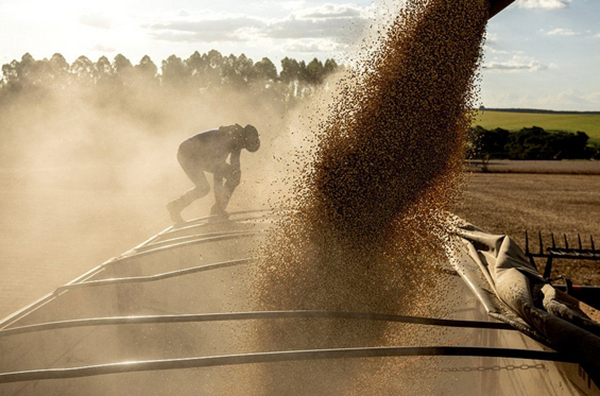
巴西戈亞斯州奧裏佐納的工人們在農場收割大豆。 視覺中國
**觀察者網:**我們開場談到了特朗普干預巴西即將到來的選舉。現在,很多關於金磚國家以及展望即將舉行的2025年聯合國氣候變化大會(COP30)的國際報道推測,盧拉總統打算利用這些活動來鞏固其外交成就,為即將到來的選舉造勢。您認為這些報道的準確性如何?無論是否準確,盧拉將自己定位為能夠召集多國共商要事的領導人,這種做法在幫助他贏得更多選舉支持方面可能有多大的效果?
**韋斯特曼:**這很難回答;我覺得這需要很多時間才能説清楚。
巴西的選舉進程屬於國內事務;當然,歷史上外國夥伴的支持也很重要。但我們現在看到的是,極右翼勢力——包括特朗普、巴西前總統博索納羅以及當今世界許多其他極右翼領導人——正與大型資本、大型工業集團、大型科技公司結盟,在全球範圍內為自己提供資金支持。
當然,特朗普已間接聲明,他將支持巴西的極右翼勢力,會在資金上、技術上提供支持,這正是我們所擔憂的。
作為應對方案的一部分,我們必須將民主國家和進步國家團結起來。例如,下週,盧拉總統將與西班牙首相佩德羅·桑切斯(Pedro Sánchez)、智利總統博裏奇(Boric)以及哥倫比亞總統佩特羅(Petro)會面,討論世界民主問題。因此,我們當然正在制定或創建戰略,以團結進步國家。
問題在於,極右翼在集結力量方面似乎更有效率,這非常令人擔憂;他們擁有更多資源,更不講道德,他們操縱信息,更善於利用假新聞。我們當然必須對此保持警惕,但我們正在制定戰略以遏制這種損害,並團結和支持進步國家。所以我們將拭目以待。
但同時要記住,巴西的選舉足夠強大,巴西的民主也足夠強大,能夠向世界表明,我們的進程是基於巴西人民主權意志的國家進程,任何外國都無權、也沒有空間干預這一進程。
**觀察者網:**最後一個問題,巴西極右翼勢力可能認同的立場之一,就是當前美國政府明確的反金磚國家組織立場。而即將到來的選舉,各方都認為競爭將非常激烈,反對派候選人很可能獲勝。考慮到這一風險,特別是對巴西持續付出的金磚承諾的風險,您認為可以採取哪些措施來建立持久的民間社會對金磚國家的支持,無論選舉結果如何?
**韋斯特曼:**嗯,這正是當今世界面臨的重大挑戰之一,即確保我們擁有足夠可信的機構,特別是那些超越當選政府意願的國際機構、國際協議和機制。政府通常更迭頻繁,而這些機構是持久的。
因此,我們深信在巴西,民間社會在這一進程中的作用至關重要。我們必須增加社會參與各類國際事務的機制,從金磚國家到聯合國機構,到G20,再到WTO,我們將支持民間社會(包括私營部門、學術界、社會運動以及各類非政府利益相關方)發揮作用,以確保無論政府如何更迭,這些機構都能保持連貫性,並符合全球民眾的真實願望。
這很難。巴西現在相信,政府的更迭也會影響政策,會削弱民間社會在國內和國際上的作用和聲音,但我們正在努力做的是播下種子。例如,我們在G20框架內創建了“社會G20”(Social G20)。我們最終得以在金磚國家領導人會晤期間讓民間社會向領導人發聲。我們正邀請民間社會代表在南方共同市場(Mercosur)會議、亞馬遜峯會(Amazon Summit)上發言。COP30的籌備過程也體現了我們推動社會參與的進程。我們讓談判代表與民間社會對話。因此,我們正在盡力而為,希望明年有機會繼續推進這個項目。
採訪原文:
Jersey Lee: Brazil is about to be subject, starting in August 1, to a 50% tariff by the U.S., that U.S. President Trump says is partly motivated by the prosecution against former President Bolsonaro. Yesterday, President Lula signed a trade reciprocity law that we will soon see the details of. So other than that, what are some of Brazil’s other attempts to either fight back or resist this sudden trade aggression by the U.S.?
Gustavo Westmann: Well, that’s a very complex question, Jersey, but I think it’s not about fighting back. It’s about making things right. So these unilateral sanctions or unilateral measures by Trump, they are completely not in synchronicity with the current global order.
First of all, we are talking about a sovereign country, a sovereign nation with a strong democracy, a democratic tradition, and a legal system that has its own independence, and we’re prosecuting former President Bolsonaro for his attempt of coup d’etat. No other foreign country should have intention of influencing such process, considering that it’s been following the democratic track. So that’s the first part of it.
So that said, the idea of Brazil is always to negotiate diplomatically and try to find solutions to all sorts of contentions. But in this case, we are ready to apply reciprocal measures, and the idea is to apply equivalent tariffs to American products in Brazil. And also, and above all, thinking on the medium and long term, starting or increasing our strategy to diversify partnerships. And that’s a place in which China, for instance, has a very special role. I think what it is doing is only speeding up an unavoidable process of fall of the U.S. hegemony. We will also take the case to the multilateral institutions that are responsible for dealing with such matters, such as the WTO and all other institutions that have worldwide acceptancy over their role as conciliatory or institutes to evaluate these matters globally. That’s what we’re doing. We’re very sober about it. I think its been politically motivated and no foreign countries should interfere in our processes. That’s how we’re evaluating that.
Jersey Lee: So you mentioned about Brazil perhaps having a mindset not necessarily about fighting back, but more about making things right. And in this vein, President Lula’s, I think, first reaction was that, and this was a quote, “Trump could have called, but instead posted the tariff news on his website—a complete lack of respect, which is typical of his behavior towards everyone”. So I suppose, first of all, would you say that perhaps the lack of respect is the primary issue? I suppose what this quote kind of says to me is that Brazil’s first response was indeed to kind of try to find a way out of this. In this vein, there’s also the vice president’s recent remarks about giving the U.S. a trade offer, which they haven’t responded to. So I guess is that how Brazil is thinking about this?
Gustavo Westmann: Man, so that’s the thing. Trump has a kind of behavioral pattern that makes him… I’m very confident that in the future, when we read history books, he will be one of the dumbest US leaders ever. That’s something I’m very confident about, because he’s only harming not only the world, but the US itself.
We are trying to be sober to deal with it, because you don’t deal with foreign policy—Of course, passion is always part of the deal—but we have to be rational and think about the long term. I think what we are discussing here is an attempt of a foreign leader to influence our domestic processes that are following the due process of law. So that is the greatest deal. Pretty much everything he announced and he said was an attempt to influence the process against former President Bolsonaro, who indeed tried to lead a coup d’etat that included the assassination, an attempted assassination of President Lula, Vice President Alckmin, and Supreme Court Judge Alexandre de Moraes. So that’s what’s in the discussion here. And we are very clear that no country will influence this process. No sort of threats will influence this kind of processes. But we are very aware about the power of the US, its importance, its relevance to the Brazilian economy.
So I think now it’s time to of course criticize, of course retaliate, of course express our dissatisfaction with what he’s doing, but also to dialogue and try to find a solution by making it clear. If we won’t find a solution through dialogue, then all the retaliation measures will be applied and that’s how things are going to work.
Jersey Lee: So, obviously, Brazil is not the only country that has been slapped with tariffs. Aside from all the other general tariffs that follow from the previous so-called Liberation Day, Trump also threatened all BRICS countries with a 10% tariff, or basically any country that even aligns with BRICS.
So do you think that this threat will be effective in any way, either by perhaps deterring some potential partners from working with BRICS, or perhaps to undermine BRICS solidarity, or perhaps would it have the opposite effect of motivating BRICS?
Gustavo Westmann: Well, first of all, if it bothered him so much that means that BRICS is gaining relevance, okay? So that’s a good thing, and that’s something we must celebrate. BRICS has been created as an alternative to the current global order, and we are being successful in building this new order. So that’s the first thing. If it bothers the U.S. so much, that means the BRICS is working. And that’s good, a reason to celebrate.
Regarding the tariffs, first of all, it’s very difficult to understand whether what he’s saying is serious or not. So since the beginning of his administration, he has already promised things and came back and sat back and more. So we don’t really know what’s his deal. So that’s something to be thinking. I definitely don’t think it will affect Brics in a negative way. On the contrary, I’m pretty confident that we will increase the relations both commercially but also politically among Brics nations. And by doing so, I’m very confident that it will attract the attention of other nations and partners, trying also to diversify their partnerships and finding in Brics a good mechanism to start with. So actually, in the end of the day, that’s good. That only reflects the strength of Brics in the current global order.
Jersey Lee: So there has also been some reports that the mayor of Rio wants to set up a BRICS headquarter in Rio. So thinking about this report, this brings to mind some discussions about the institutionalization of BRICS. Some people are very much supportive of having a headquarter to advance BRICS, to give it a structure, others might be concerned that it might bureaucratize the organization, might make it less efficient, and also might make it more rigid. So, even aside from where to have a potential BRICS headquarter, what’s your view of whether we should even have a BRICS headquarter?
Gustavo Westmann: I think we are very far from that kind of discussions in BRICS Jersey. We are now discussing the institutional improvement of the group and that’s involving discussions on the new role of the new members, so lots of things in discussion, but we’re very far from getting to the institutional or creating a secretariat or permanent secretariat for this; frankly speaking that’s a discussion that has to be done by all members all together. The moment is not the best one for that, I believe, and again we’re very far from that.
It’s difficult to say. I think we’re very far from that. Anything we say about creating a permanent secretariat will be speculation. The members cannot even decide whether the next presidencies or how the next presidencies are going to work; imagine how a permanent secretariat works. I wouldn’t bother dipping into this discussion right now, but that’s some part of discussion to be taken forward in the next years, but calmly and discussed by all parties.
Jersey Lee: Looking back on the Rio leader summit and the events immediately before and after that, what would you say were the biggest results from Brazil’s perspective? And also on the other hand, from Brazil’s perspective, what are some perhaps misses or perhaps things that need further work?
Gustavo Westmann: Let’s say that the current global context is extremely complex; so I believe that having a leader’s declaration, having three other declarations, one on intelligence, one of financing the fight on climate change, the other one on health, they all reflect a great effort and a great commitment of BRICS countries. So that was a victory. We cannot deny it. So definitely the fact of putting BRICS agenda on the radar and having concrete results on that is definitely something to celebrate.
From my personal perspective, what can I tell you that disappointed a little bit? Of course, we are always looking or searching for more ambition, right? So I would love to see a very ambitious declaration leading to more outcomes and condemning, for example, the Israeli attacks in Palestine or, well, so many other things.
But we should not forget, we must not forget that BRICS decisions are made based on consensus. So we have to work together on these things. But I think it was good. I think it was quite positive overall.
Jersey Lee: So moving to China-Brazil relations, one thing that’s been recently discussed is a possibility of building a railway that links Chancay port with a port on the east coast of Brazil. So right now, apparently, it’s just the start of feasibility studies. So from your perspective, what’s the feasibility of such a project, especially from an economic perspective?
Gustavo Westmann: Well, I don’t really know the details about it, but what I can tell you regarding this combination of variables. First of all, I think the relationship between Brazil and China have already improved quite a lot. The challenge now is to improve in terms of quality. Our bilateral trade is huge, but we still lack high technology products, or we need to add value to our trade, especially on the Brazilian side. I think also we need to work more strategically together, and that’s something that has been improving in recent years. We have to bring together our societies, bring together our scientific parks, universities. So that’s something that still has to improve.
The idea of working on a railway financed or with the Chinese technology in Brazilian territory sounds great. Brazil has a great location for trains. During the 60s, we made a wrong decision and we opted to roads and cars. and we’re still paying the price for that bad choice in the current days. Brazil has the perfect territory for railways, and yet we only have cars, we have a very poor railway net. So I believe following all the legal processes involved, if China wins or if China is to be the main partner in this project, that will only increase our bilateral relations. So that’s something good, something to incentivize from our side, from the government side. It has become very clear that Brazil and China have more to work closer together.
Jersey Lee: So you talked about bringing people from both sides together. And in May, when Lula visited Beijing, China offered a number of countries, including Brazil, visa-free access to China. Now, Brazil generally has a visa reciprocity system principle where generally any country that offers Brazil visa free access, Brazil does the same in exchange, and any country that stops offering Brazil visa free access, Brazil also stops offering visa free access in exchange. Given this, we should expect perhaps Brazil to soon offer Chinese visa-free access to Brazil. But that obviously hasn’t happened before the BRICS Summit, so when could we expect this?
Gustavo Westmann: Well, that’s a more complex discussion and it’s under responsibility of our colleagues from the Ministry of Foreign Affairs. Definitely on the radar, so something we’ve been discussing, and I think it’s gonna happen, we just need to figure out when; I would expect it to happen soon, but it’s a lot more complex. You should not forget that China has 1.3 billion people. So that’s not such an obvious decision to be made, it involve lots of variables, and it has to be taken carefully, but yes, it’s totally on the radar, and let’s see. We should keep monitoring that.
Jersey Lee: In terms of Brazil’s general international approach, I listened to you speak at a recent conference where you mentioned one of Brazil’s big international agendas is to get opposing sides to sit down together and talk and negotiate, especially out of conflicts. Of course, it’s not just Brazil that’s been positioning themselves this way. India has been talking about this. Turkey has been talking about this. UAE, Saudi Arabia, even the U.S. under Trump, even though Trump participated in the Iran strike, later Trump positioned himself as kind of a peacemaker between Israel and Iran. China has also pushed a number of rapprochement deals in the Middle East. So, given all of these countries interested in serving as kind of a negotiator or facilitator of negotiations. What’s special about Brazil that makes it a good partner to negotiate resolution? Perhaps could you mention progress in Brazil’s Ukraine peace proposal, as well as you mentioned your desire to see some statement condemning Israel in its war on Gaza, perhaps is there some attempt by Brazil to get peace there?
Gustavo Westmann: Well, let’s say, before I answer, just stop and think. Which countries in the world would be able to moderate conflicts or to bring diverse opinions in such a polarized world together? Actually, there are very few. And Brazil would definitely come to everyone’s mind as a first thing. Why is that?
Brazil has a great tradition of peaceful solution of conflicts. We have no wars, we have no enemies. We have a peaceful neighborhood. Brazil has been a member of the UN from its very foundation. Brazil has always positioned itself in terms of dialogue and conciliation. The leadership of President Lula, which is definitely one of the greatest leaders or statesmen in the current days, contributes to that, the fact that it comes from the people and he understands people. I think all these, of course, the regional leadership, economy, population, all these variables position Brazil as a country to be trusted. Of course, we have our problems. But when talking about great processes, Brazil is definitely a country to be trusted.
You mentioned a few other countries that are extremely important, of course. But for example, India; I lived in India. India has a problem with China. You’ve been in indirect conflict for quite a while. India has a problem with Pakistan. You mentioned South Arabia. Saudi Arabia has a great problem with some of its neighborhoods. You mentioned a few other countries. Well, the United Arab Emirates, such a small country, even though that’s a very rich country. What kind of credibility in terms of leadership and moderation power they are bringing to the fore? I’m not saying bad things about these countries, definitely not. And I think every country that is willing to find peaceful solutions to the current conflict is contributing to that. But I’m pretty confident that Brazil has a strategic role in this sense.
That said, it depends, of course, on the conflict or the nations in conflict to accept the legitimacy of the country trying to moderate the conflict. What we say is that we are ready to offer our support as we’ve already done regionally and several other conflicts worldwide. But of course, it depends on these countries to accept or not our support and our offer.
Brazil and China have been seriously working on a peaceful solution to the war in Ukraine. We’ve been working together on that, even though we did not make significant progress so far. The discussions continue in New York between our permanent representatives to the UN, and things have been working out.
Regarding the Israeli war, the things are a bit more complex, because we understand that that’s a clear genocide from Israel in Palestine, and that makes situations more difficult. It’s not that we are for or against one or another, but we are condemning what’s going on there. There is a clear conflict, a clear attempted genocide, and that should not be accepted in any case. So that’s how Brazil has been positioned itself, and I believe we have great conditions to contribute, but it will, of course, depend on the nations in conflict.
Jersey Lee: So you mentioned working with China on getting peace in Ukraine. Is Brazil also working with the current US administration, which seems to be, at least until recently, very much for peace in that conflict?
Gustavo Westmann: Not really. Currently, our relations with the U.S. are not at their best for obvious reasons. And the way the U.S. has been positioning itself is extremely authoritarian, even though they are a democracy. So they’re not really dialoguing with other nations in search for partnerships in solving the current conflict. So we’re just monitoring things, but no, we are not working close with the US in these processes.
Jersey Lee: You mentioned your former role in Brazil’s embassy in India, working in the trade office. Obviously, this would be direct involvement in the connective tissue that ties BRICS countries together. Could you talk a bit about that, describe what you did?
Gustavo Westmann: I think the main thing out of these this experience, and thinking about BRICS, is having the opportunity to understand this country. I think by living in India—and I’ve been to China many, many times already—And by traveling, by knowing, by visiting, by understanding a little bit the societies of these countries, we better understand how BRICS makes sense and how we indeed can work together. To many people, it’s still too far away. In your case, for example, you just came to Brazil. So you see, despite differences, you also see the potential of the relations between our nations and working together. In India, something that called my attention—and that’s one of the cornerstones of BRICS—is that you see the world changing, you see the development going on; you see the same in China, like if you stay away from Shanghai just a couple of years, when you go back, the city, the landscape is already different, because progress is ongoing. That’s something you don’t see in Europe, and that’s something you don’t see in the US, especially Europe, that’s the old—it’s not bad, it’s just the old. BRICS is the new, is the progress, the transformation, the new center of the world economy and consequently in the future of the political reality. So I think that’s what I took the most from my experience at the Trade Office at the Embassy of Brazil in India.
Jersey Lee: So you first raised a question, how does BRICS make sense? And I suppose, listening to your response, your answer to that question would be that what all BRICS countries have in common is this sense of progress, of change. So what does that mean? What are the implications of this progress, what does mean in terms of cooperating each other, what does that mean in terms of the agendas, and also for BRICS as an organization?
Gustavo Westmann: To start with, these are the countries that are changing the world from inside. The new middle class of the world is coming from these countries. Technology, progress is coming from these countries. So there is a lot going on in BRICS nations. That means that the potential of these countries as trade partners, as political partners, as economics and finance partners, as cultural allies, we will increase. In my vision, and that’s important to say, if you see the data historically, where the economy starts booming, then later it comes political and soft power influence. So we are still, especially led by China, of course, also by India, Brazil, Russia, South Africa, if we take into consideration that these countries will be the engine of the world economy in the next decades and centuries, you have to admit that as a consequence, they will also be leading the world politically, financially. And by start working together now, I think we will be more mature when this moment comes, when the moment comes for us to finally have a more just and fair international order, as BRICS was born, that’s the nature that brought us together as BRICS nations: to change the world, to make sure that 50% of the world GDP is effectively listened to or be part of the decision-making. So that’s how I see these things.
Jersey Lee: In terms of international or even domestic justice, one thing that’s very close to President Lula’s heart is the idea of an international tax on the super rich. And this was something that was raised in G20 last year. And this year, I remember you raised it in a conference, and Haddad also raised this in the NDB annual forum. Of course, in the months that have elapsed since G20, there has been a change in the global landscape on this, especially now that we probably can’t expect any degree of cooperation from the U.S., and perhaps the U.S. might even be totally against this and might even attack this process. So how would Brazil push for this given the new geopolitical and international landscape?
Gustavo Westmann: Well, Jersey, we’ll keep pushing. What’s going on in the world is extremely unfair and it doesn’t make sense at all. So the recent data has shown that from 2015 to 2022, the wealth of the 1% richest people in the world increased by $33 trillion. This amount of money could have solved the problem of extreme poverty and hunger in the world. It could have solved so many, the climate change problem in the world. And why? What is happening with these resources?
So in the past, in the economic theory, some people used to say that you have to first to increase the size of the cake and then you split it accordingly. History has shown that this doesn’t work. Once you increase the size of the cake, you make the wealthy even wealthier, and you will increase the social gap between human beings.
So we will insist on taxing the super-rich, and of course, so many other things we’re talking about, issues such as debt, that has become the greatest challenge to development in the current days. When you see the people in the Global South, pay over 1.4 trillion in the services of debt to the North, while receiving less than $200 billion in official assistance to development.
So what we are doing in the world, is we are seeing the negative flux of capital, the South sending resources to the North. And that’s not working.
Another thing is the reform of the financial governance, the financial architecture. We are underrepresented in these processes. Taxation, of course, that includes the taxation of super-rich, but also cooperation in other matters. So we are very concerned about all these issues. And you keep pushing the agenda. Taxation of super-rich is not simple because we don’t have international institutions to tax the super-rich, on where to put these resources and how to expand the resource. We still don’t have this governance model. But we are working on national solutions to the taxation of super rich, the creation of global funds. And that should be a priority to every nation.
Jersey Lee: So we opened with a question on Trump interfering in Brazil’s upcoming elections. Now, a lot of international coverage over BRICS and looking forward to the upcoming COP30 has hypothesized that President Lula intends to use these to shore up his foreign policy credentials for the upcoming elections. So how accurate would you describe these report, and regardless of how accurate it is, how effective might Lula positioning himself as someone who can bring many countries together to talk about important issues, how effective would that be in helping him get more support electorally?
Gustavo Westmann: Oh man, that’s tough; I think that answer needs a lot of time.
So Brazilian electoral process is a national process; of course, historically the support of foreign partners has been important. But what we are seeing in the current days is that the extreme right, which includes Trump, which includes President Bolsonaro in Brazil, and so many other leaderships in the current world, they are aligning themselves with great capital, with great industry, with the great tech companies to finance themselves worldwide.
Of course, Trump has already declared, even though indirectly, that he will support the extreme right in Brazil. By doing so, he’ll do that financially, he’ll do that technologically, and that’s something that we are concerned about.
And as part of our reaction, we have to bring democracies and progressive nations together. For example, now, the next week, President Lula is going to meet President of Spain, Pedro Sanchez, Boric, president of Chile, and Pedro, president of Colombia, to discuss democracy in the world. So we are, of course, working or creating strategies to bring progressive nations together. The problem is the extreme right is being more effective in aligning forces, and that’s very worrisome; they have more resources, they have less ethics, they manipulate information, they deal better with fake news. Of course we must be concerned about it, but we are working on strategies to contain such damage and to align and also to support progressive nations. So we’ll see what’s going to happen.
But also keeping in mind that the elections in Brazil is strong enough and Brazilian democracy is strong enough to show to the world that our process is a national process based on the sovereign will of the Brazilian population, and no foreign nation will have space or will have the right to interfere in such process.
Jersey Lee: So a final question. One of the positions that the far right in Brazil might align with is with the current US administration’s explicitly anti-BRICS view. But the upcoming election, by all accounts, is shaping up to be quite a competitive one that some candidate from the opposition could very well win. And so given this risk, especially to Brazil’s ongoing BRICS commitments, what do you think are some measures that could be done to build enduring civil society support for BRICS, regardless of election results?
Gustavo Westmann: Well, that’s something that is one of the great challenges of the current days, Jersey, worldwide is to make sure that we have institutions credible enough, especially international institutions and international agreements and mechanisms that go beyond the willingness of elected governments. Governments, they come and go, normally. These institutions, they remain.
So we are convinced here in Brazil that the role of civil society in this process is crucial. We have to increase the mechanisms of social participation in all sorts of spheres, from BRICS to UN institutions, to G20, to WTO. And we will support the role of civil society, including private sector, academy, social movements and all sorts of non-government stakeholders, to make sure that regardless of changes in governments, these institutions remain coherent and in line with the authentic wishes of the global population.
It’s tough. Brazil now believes that a change of government would also impact strategies, would reduce the role and the voices of civil society nationally and internationally. But what we’re trying to do is plant seeds. For example, we created the social G20 in the G20. We finally had the opportunity to bring the civil society to speak to the leaders at the BRICS. We are bringing civil society representatives to speak at Mercosur meetings, at Amazon Summit meetings. COP30 has been a process that has been reflecting our processes of social participation. We’re bringing negotiators to talk to civil society. So we’re trying to do our part. And we hope we’ll have the chance to continue this project in the next year.

本文系觀察者網獨家稿件,文章內容純屬作者個人觀點,不代表平台觀點,未經授權,不得轉載,否則將追究法律責任。關注觀察者網微信guanchacn,每日閲讀趣味文章。