周波:事實證明,不會再有“第二個雅爾塔”
guancha
Club提要:8月20日,清華大學戰略與安全研究中心研究員周波在《南華早報》發表題為“A new European security landscape is emerging after Alaska summit ”(《阿拉斯加峯會之後,歐洲新的安全格局正在浮現》)的評論文章。
周波認為,阿拉斯加峯會雖未取得實質性成果,但特朗普在美國高規格接待普京,並接受訪俄邀請,顯示西方對俄羅斯的孤立正在逐步削弱。與此同時,美國對烏克蘭的安全承諾依然模糊,“以土地換和平”的設想難以落地。在北約擴張接近尾聲、俄羅斯收縮的勢力範圍重新得到鞏固的背景下,一個新的歐洲安全格局正在浮現。
北京對話和觀察者網發佈中文版如下。
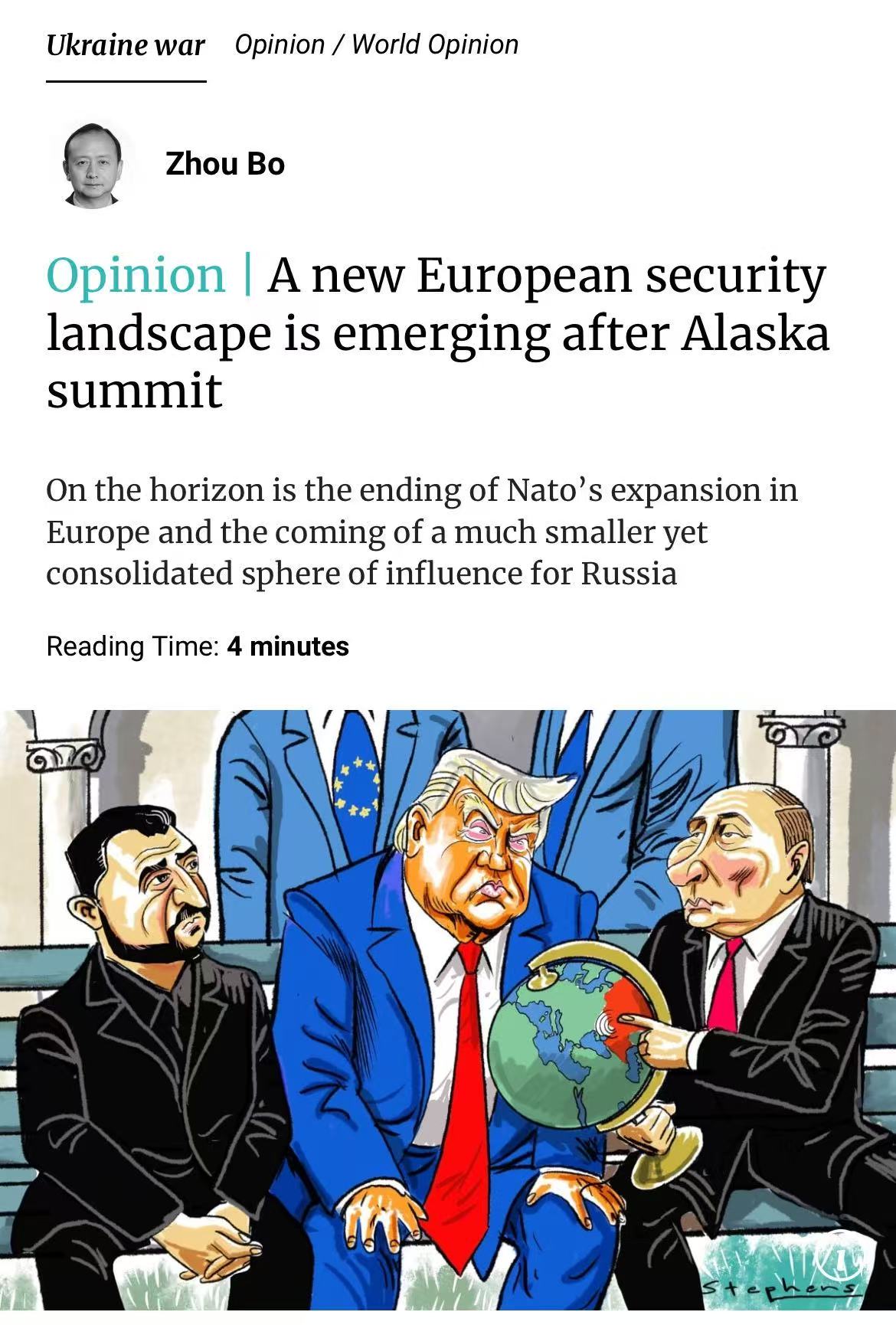
【文/ 周波,翻譯/ 王凡非】
特朗普與普京在阿拉斯加舉行的峯會,本質上是特朗普的一次“試探氣球”,藉此探知普京的真實意圖。隨後在白宮舉行的特朗普與澤連斯基以及歐洲領導人的會晤,則是另一次“試探氣球”,歐洲想搞清楚特朗普在想什麼。兩場會晤雖然有用,但成果有限。
首先,普京無疑是最大贏家。在與俄羅斯有歷史淵源的美國土地上受到紅地毯高規格接待,對普京來説再令人欣慰不過。
如果説“良好的開始是成功的一半”,那麼普京順水推舟邀請特朗普赴莫斯科繼續會談,又向前拱了一步。若特朗普成行,俄羅斯在西方世界的孤立處境就會被逐漸打破。如果特朗普願意進一步探討其他領域合作,俄羅斯更是求之不得,這可以使這個被西方制裁的國家逐步恢復為一個“正常國家”。
普京顯然深諳恭維之道。他説:“今天,當特朗普總統説,如果當年他是總統,就不會發生戰爭,我完全確信,這確實會如此。”特朗普很難不點頭附和。
已經持續三年半的戰爭依然沒有停火跡象,這很好理解。戰場上無法獲得的東西,在談判桌上同樣難以拿到。同時,俄羅斯更傾向於討論和平協議而不是單純的停火,其背後的邏輯也非常清晰。
既然俄軍在戰場上進展順利,但尚未完全控制其認定為俄羅斯領土的四個地區,那麼普京就沒有理由急於停火。
相比之下,特朗普被夾在普京與澤連斯基之間。二人都對他甜言蜜語,但不作出實質性妥協。特朗普不斷誇誇其談,但是讓人記憶深刻的是誇口“24小時解決衝突”。如今特朗普已執政200多天,承諾仍未兑現。他恐怕不得不盡快訪問莫斯科,否則受到質疑的將不僅是其個人信譽,也包括美國的國際聲譽。
然而,特朗普屢次提到的“土地交換”不過是一場騙局。怎麼可能“土地交換”?特朗普的建議本質上就是要求烏克蘭以領土換和平。
在白宮會談中,特朗普聲稱美國將向烏克蘭提供安全保障。但這種保障究竟是什麼?北約秘書長馬克·呂特已經承認,這其中缺乏清晰界定。
美國特使維特科夫甚至聲稱,普京對美國為烏克蘭提供“第五條款式保護”持開放態度。但這一説法令人懷疑。普京完全清楚,這種安排等同於讓烏克蘭距離加入北約更近一步。
與此同時,歐洲在阿拉斯加峯會後似乎長舒一口氣。歐洲最大的擔憂是峯會會演變為“新雅爾塔”,即1945年那場瓜分歐洲的會議。但事實證明,不會再有“第二個雅爾塔”。歐盟將俄烏衝突視為生死存亡的挑戰,即便美國選擇退場,歐洲也決心在經濟與軍事上支持烏克蘭。
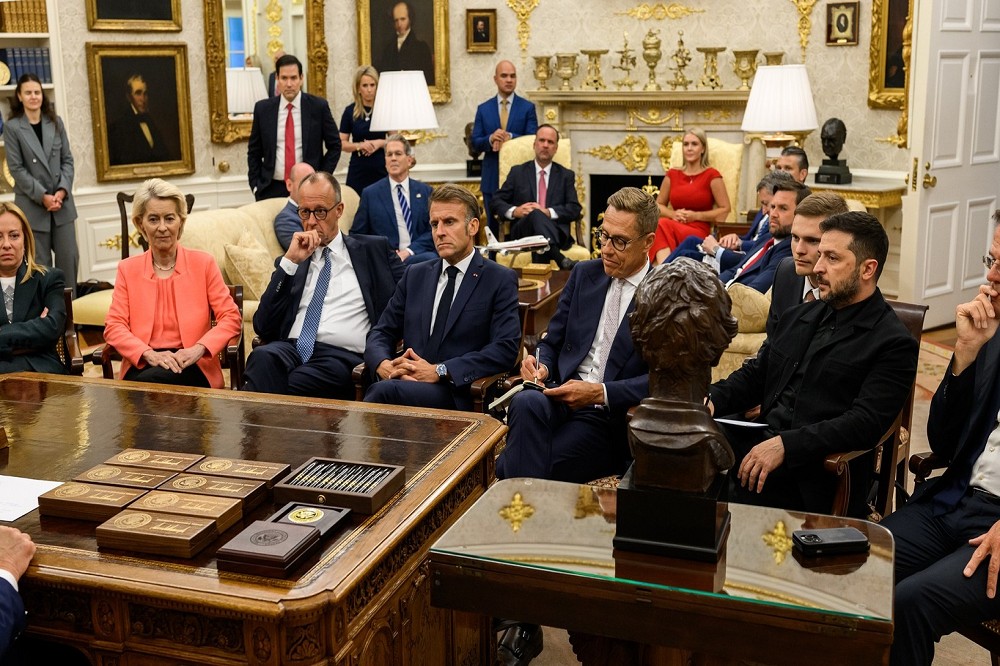
烏克蘭總統以及歐洲領袖,在白宮橢圓形辦公室與特朗普交換意見。白宮FB
這種戰略已經奏效。特朗普已表態將推動澤連斯基與普京的雙邊會晤,並隨後舉行三方會談。
接下來,局勢取決於烏克蘭。若澤連斯基不向俄羅斯割地——而這在烏克蘭憲法下幾乎不可能實現——那麼烏克蘭真的會“戰鬥到最後一人”嗎?俄羅斯人口是烏克蘭的三倍以上,其政府能夠動員更多人力與武器,並向士兵支付高額薪資與獎金。儘管雙方損失慘重,但對比之下,消耗戰對莫斯科而言遠比對基輔可承受。
無論是俄羅斯還是歐洲,都將這場戰爭視為生存攸關。俄軍去年僅多佔烏克蘭1%的領土,足以説明戰場今後還是僵局。
然而,時間站在俄羅斯一邊。俄羅斯的首要目標是確保烏克蘭永遠無法加入北約,而這看起來是可以實現的。儘管北約仍聲稱烏克蘭的入盟路徑“不可逆轉”,但遲遲不給出時間表。與此同時,俄羅斯希望削弱烏克蘭的軍事實力。這也有可能。烏克蘭已有近700萬人口外逃,加之戰爭傷亡,烏克蘭人口規模已經縮減。
在戰爭迷霧之中,歐洲新的安全格局正在逐漸顯現:北約在歐洲的擴張趨勢或將終結,而俄羅斯則可能形成一個更小但更穩固的勢力範圍。
幾十年來,北約對俄羅斯反對其擴張的警告充耳不聞。如今,這是冷戰結束以來,俄羅斯首次有機會重新塑造其對北約的戰略定位。在普京看來,戰爭每天帶來的人員傷亡,是實現俄羅斯偉大民族浴火重生所必須付出的條件。
因此,俄羅斯將繼續拖延時間,任何停火在短期內都不可能實現。與此同時,正如特朗普在七月自己承認的那樣:“實話説,我們從普京那裏捱了不少屁話。”
(翻頁查看英文版)
The Alaska summit between US President Donald Trump and Russian President Vladimir Putin was a test balloon for Trump to find out, as he said, what Putin had in mind. The subsequent meeting in the White House between Trump, Ukrainian President Volodymyr Zelensky and European leaders was another test balloon – for Europe – to find out what Trump had in mind. Both were useful yet not really productive.
To start with, Putin has emerged as a clear winner. The red-carpet welcome on American soil with a historical connection with Russia could not have been more gratifying.
If well begun is half done, Putin has capitalised on the occasion by springing an invitation on Trump to travel to Moscow for the next talk. If successful, Russia’s isolation in the West would be gradually lifted. Even better if Trump wants to talk about anything else that could help to turn the West-sanctioned country into a normal one.
And Putin most certainly knows how to flatter. As he said: “Today, when President Trump [said] that if he was the president back then, there would be no war. And I’m quite sure that it would indeed be so.” How can Trump not nod to this?
It is easy to understand why the war, which has gone on for 3½ years, shows no sign of ending soon. What one cannot achieve on the battlefield can hardly be gained at the negotiation table. It is also easy to understand why Russia wants to talk about a peace agreement rather than a ceasefire.
Why would Russia hurry to put down arms when it is making significant progress on the battlefield and has yet to fully control the four regions it regards as its territory?
In contrast, Trump is now sandwiched between Putin and Zelensky. Both have praised him but neither has moved much by way of compromise. Notable among Trump’s many promises is his bragging about solving the conflict in 24 hours – it is now more than 200 days into his presidency. He will probably have to go to Moscow soon. If he doesn’t, it’s not only his credibility, but also America’s clout, that will be in doubt.
The “land swap” Trump repeatedly mentions is a hoax.How can a land swap happen at all? Trump’s suggestion is essentially for Ukraine to sacrifice its land in exchange for peace.
At the White House talks, Trump said America was committed to providing security guarantees for the Ukrainians. But what exactly are they? Nato Secretary General Mark Rutte has admitted there was a lack of clarity.
US envoy Steve Witkoff claimed Putin had signalled openness to the United States offering Ukraine Article 5-style protection – Article 5 is Nato’s collective defence mandate. I doubt that. Putin would know it risks moving Ukraine one step closer to joining the transatlantic security alliance.
Europe, meanwhile, can sigh with relief after the Alaska summit, it seems. Its worst fear was that the summit would turn out to be another Yalta conference – the 1945 meeting where world leaders met to divide up Europe. But there won’t be a second Yalta. Europe believes the Ukraine war is an existential challenge. It is determined to help Ukraine economically and militarily even if the US decides to walk out.
Such a strategy has worked. Trump has said he would initiate a meeting between Zelensky and Putin, followed by a trilateral meeting with him.
The ball is now in Ukraine’s court. If Zelensky does not cede territory to Russia – a challenging act given Ukraine’s constitution – will Ukraine really fight till the last man? Russia’s population is more than three times bigger than Ukraine’s. The Russian government has mobilised more men and arms than Ukraine has. It has paid huge salaries and bonuses to Russian soldiers. In spite of the heavy losses on both sides, the war of attrition is more affordable for Moscow than for Kyiv.
Both Russia and Europe view the war as existential. That Russia was only able to conquer 1 per cent more of territory in Ukraine last year tells of the battlefield stalemate to come.
But time is on Russia’s side. It wants to make sure Ukraine never gains Nato membership. This looks achievable. Although Nato still holds that Ukraine’s path of entry is irreversible, it won’t provide a timeline. Russia also wants to make sure Ukraine’s military is downsized. This may be. Thanks to the exodus of almost 7 million people and war casualties, Ukraine’s population has already shrunk.
Amid the fog of war, a new European security landscape is starting to appear on the horizon. That is, the ending of Nato’s expansion in Europe and the coming of a much smaller yet consolidated sphere of influence for Russia.
For decades, Russia’s warnings against Nato’s expansion fell on deaf ears. Now, for the first time since the Cold War, Russia can reshape its strategic positioning vis-a-vis Nato. For Putin, the daily casualties brought about by the war are a necessary condition for the rebirth of a great nation.
So Russia will buy time and any ceasefire will not be confirmed soon. Meanwhile, as Trump himself acknowledged back in July: “We get a lot of b******t thrown at us by Putin, if you want to know the truth.”

本文系觀察者網獨家稿件,文章內容純屬作者個人觀點,不代表平台觀點,未經授權,不得轉載,否則將追究法律責任。關注觀察者網微信guanchacn,每日閲讀趣味文章。