【摩根看世界】連美國人自己都説,特朗普已成“關税恐怖分子”
guancha
【文/觀察者網專欄作者 摩根】
這一週從混亂開始。美國總統唐納德·特朗普宣佈對所有中國進口商品徵收100%的關税,令全球市場震驚。他指責北京採取了“極具敵意”的行動,因為中國限制了對美國工業至關重要的稀土材料出口。
這一舉動看起來像是一種報復——一位長期痴迷於關税的總統的本能反擊。市場立刻作出反應,道瓊斯指數暴跌,僅一天就蒸發了近2萬億美元的市值。投資者擔心,一場全面貿易戰即將捲土重來。
不到24小時,特朗普就放軟了口氣。他在“真理社交”(Truth Social)上寫道:“別擔心中國,一切都會好的!中國不想陷入蕭條,我也一樣。”這與他先前的強硬言辭形成鮮明對比——從展示力量的表演,變成了自己製造的不確定感。
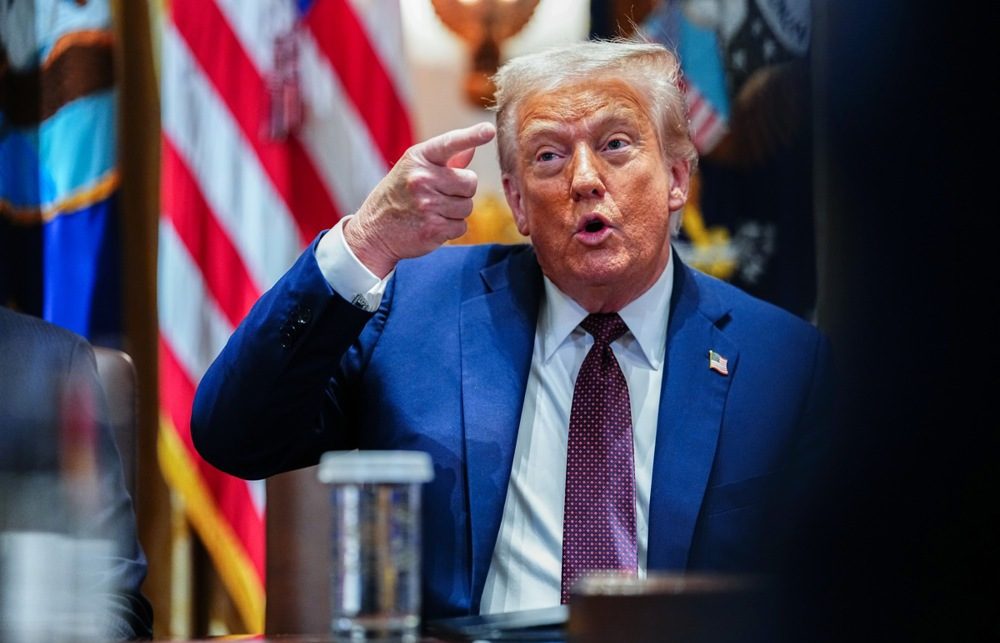
特朗普 資料圖
以不變應萬變
當華盛頓的言辭變得越來越激烈時,北京卻保持了驚人的冷靜。中國商務部發表簡短聲明,警告稱:“動輒以高額關税進行威脅,不是與中方相處的正確之道”,並重申,關於貿易戰“中國不願打,但也不怕打”。
此後,北京幾乎保持沉默——沒有激烈的演講,也沒有戲劇性的報復。即便是在網絡上,最初的民族情緒爆發之後,輿論也很快平息。整個中國媒體的基調可以用一句老話來概括:
“以不變應萬變”——以穩定應對萬變。
這句話精準地概括了當下中國的心態:剋制、耐心,以及對局勢最終穩定的信心。
特朗普的新一輪關税行動,是多年積累的故事的延續。2025年他重返白宮時,市場早已預料到結果——關税。上任最初幾小時內,特朗普就重新點燃了其第一任期中定義性的經濟民族主義——只是這一次,規模更大,目標更廣。
在2020年的“第一階段協議”之後,中美貿易戰似乎有所降温。關税仍在,但升級停止。拜登總統任內語氣變得温和,然而競爭卻更深入。拜登保留了特朗普的大部分關税,同時將重心轉向產業政策與聯盟合作——推出《芯片與科學法案》《通脹削減法案》,並加強與歐洲、日本的協調。
中國則加倍推進自主化進程——擴大半導體項目、電動汽車製造以及可再生能源供應鏈。從中國的角度看,正是特朗普在其第一任期迫使中國完成了這一轉型。早在2018年特朗普最初對中國發起關税和產品限制措施時,中國就清楚地認識到全球供應鏈在美國壓力面前的脆弱性。此後近十年間,中國持續推動全面的自給自足戰略——從芯片、電池到農業與航運——確保在2025年比以往任何時候都更有能力應對貿易戰。北京從那次衝擊中吸取了教訓:要夯實國內實力,讓未來的貿易戰再無法撼動經濟。因此,中國網友戲稱他為“川建國”——意為“建設中國的特朗普”。
2025年4月,第一次激烈的正面對抗爆發。特朗普發起了所謂的“對等關税戰”,短短幾天內,中美雙方進入瘋狂的你來我往,關税水平飆升至歷史高位,美股應聲暴跌。當全球許多國家屈服於美國壓力時,中國的堅定立場贏得了包括巴西、印度在內的全球南方國家的掌聲。一幅題為《就不跪》的中國漫畫在網絡上走紅,激起強烈的愛國情緒。經過從日內瓦、倫敦到斯德哥爾摩、馬德里的多輪緊張談判,雙方都呼籲冷靜。
從休戰到升級
市場一度認為休戰到來,但隨後而來的沉默,其實只是新的倒計時。
到8月下旬,華盛頓擴大了針對中國科技與航運企業的出口管制,指控它們幫助規避半導體出口限制並支持“軍民兩用”供應鏈。不久後,特朗普的顧問團隊提出禁止中國民航飛機飛越美國領空的構想,並獲得總統公開支持。在北京,這些舉動被視為赤裸裸的挑釁——而中國的回應既低調又精準。
到9月中旬,中國悄然暫停了新的美國大豆採購,並稱此舉為“市場調整”。事實上,這是首個有分寸的反制行動。期貨價格迅速下跌,美國中西部的倉儲設施開始爆滿。華盛頓很快明白了這一政治信號:通過打擊農業——特朗普選舉基本盤的支柱產業——北京表明自己可以精準還擊,而無需升級對抗。
幾周後,中國港口管理部門開始審查與美國有關的航運公司的通關手續,以“技術原因”延遲多批貨物放行。與此同時,根據美國貿易代表辦公室(USTR)在4月17日發佈的《301調查報告》,美國宣佈將從10月14日起,對由中國公司擁有或運營、懸掛中國國旗或在中國建造的船舶徵收額外的港口服務費,理由是“中國在航運、物流與造船業中的不公平競爭”。
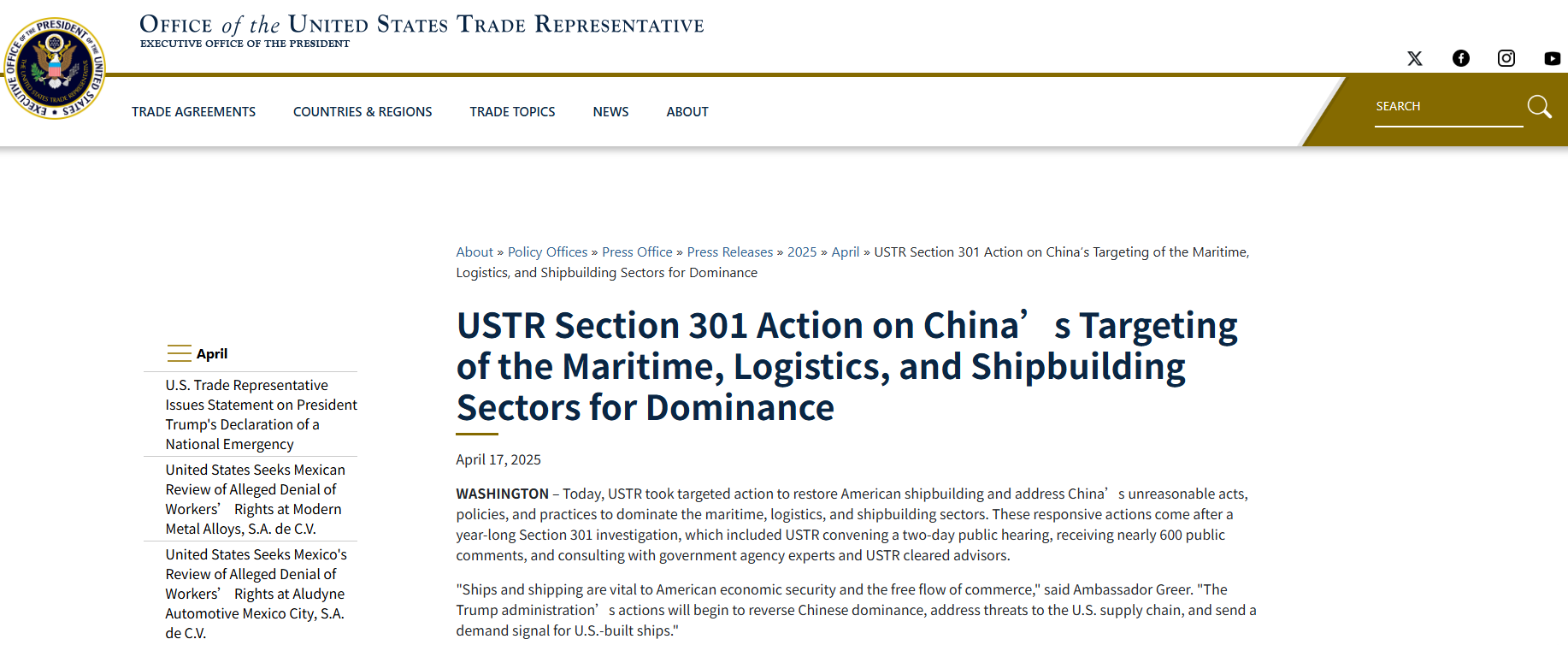
美國對中國海事、物流和造船業發起“301調查”
從大豆到航運再到航空——每一步摩擦都加深了不信任,撕裂了脆弱的平衡,也為10月的關税衝擊埋下了伏筆。
倒計時在2025年10月10日達到高潮。特朗普宣佈要對所有中國進口商品徵收全面100%關税,計劃於11月1日生效。這項新措施不僅涵蓋稀土和戰略礦產,還包括汽車、電子產品、綠色技術組件和醫療設備——幾乎覆蓋了雙邊貿易的全部範圍。
特朗普將此描述為針對中國“經濟侵略”的“防禦性舉措”,指責北京把稀土出口管制武器化,而這些材料對美國的國防和工業至關重要。
北京的回應剋制但堅定。中國商務部的聲明指出:“動輒以高額關税進行威脅,不是與中方相處的正確之道”,並補充道,如果美國“執意走錯路”,中國將“採取堅決措施維護自身的合法權益”。
市場再次動盪。歐洲主要股指下滑近1%,而比特幣在暴跌後因北京選擇不報復而反彈。目前,中國選擇了冷靜而非對抗——相信隨着時間推移,經濟規律終將讓局勢迴歸有利於自己的一方。
“關税恐怖分子”
唐納德·特朗普的第二任期始終被一個關鍵詞定義——升級。正如美國評論員所説,他已成為一名“關税恐怖分子”:利用經濟破壞的威脅,不是為了談判,而是為了表演。
自連任以來,特朗普把關税變成了既是武器又是舞台的工具——通過貿易來壓制中國。這迎合了他的基本盤,但在這場表演背後隱藏着深刻的缺陷:美國已經失去了支撐真正貿易戰的工業基礎。
這種失衡在稀土領域體現得最為明顯——它是現代國防、能源與科技的支柱。中國目前控制着全球70%至80%的稀土精煉能力,這得益於自鄧小平提出“中東有石油,中國有稀土”以來數十年的國家投資。相比之下,美國既沒有足夠的設施,也缺乏與中國競爭的價格優勢。其唯一重要的礦山——加州的山口礦(Mountain Pass)——仍將大部分礦石運往中國加工。即便投入數十億美元補貼,要重建完整的稀土產業體系也需要多年,而政治意願顯然並不存在。
因此,特朗普的關税揭示了一個根本矛盾:他試圖懲罰的,正是美國在軍事和科技領域高度依賴的國家。這是一場沒有籌碼的貿易戰。
當特朗普的威脅聲在全球市場迴盪時,中國依然穩如磐石。政府的沉默不是軟弱,而是自信——表明北京明白自己完全可以等待。經濟民族主義或許能在華盛頓贏得掌聲,但中國的信息十分明確:
“以不變應萬變”。
Trump the Tariff Terrorist
The week began with chaos. President Donald Trump shocked global markets by announcing a 100% tariff on all Chinese imports, accusing Beijing of “very hostile” actions after China restricted exports of rare-earth materials vital to U.S. industry.
The move looked like revenge — a reflexive strike from a president long obsessed with tariffs. Markets instantly revolted. The Dow Jones plunged, wiping nearly $2 trillion from U.S. value in a day. Investors feared the return of a full-scale trade war.
Within 24 hours, Trump softened his tone. On Truth Social, he wrote:
“Don’t worry about China, it will all be fine! China doesn’t want Depression, and neither do I.”
It was a sharp contrast to his earlier rhetoric — a performance of strength giving way to self-inflicted uncertainty.
While Washington’s language grew volatile, Beijing stayed remarkably calm. The Ministry of Commerce issued a brief statement through Xinhua, warning that “wilful threats of high tariffs are not the right way to get along with China,” and repeating that China “does not want a trade war, but is not afraid of one.”
After that, Beijing said little. No fiery speeches, no dramatic retaliations. Even online, public sentiment settled quickly after an initial burst of nationalist emotion. The tone across Chinese media could be summed up by an old saying —
“以不變應萬變” — Stay steady to navigate all changes.
That phrase captures China’s current mindset with precision: restraint, patience, and confidence that volatility will pass.
Trump’s new tariff campaign is the continuation of a story years in the making. When he returned to the White House in 2025, markets already knew what to expect: tariffs. From his first hours back in office, Trump revived the same economic nationalism that defined his earlier term — only this time, the scale was larger and the targets broader.
After the 2020 “Phase One” deal, the U.S.–China trade war appeared to cool. Tariffs remained, but escalation stopped. Under President Joe Biden, the tone softened even as rivalry deepened. Biden kept most of Trump’s tariffs while shifting toward industrial policy and alliances — the CHIPS and Science Act, the Inflation Reduction Act, and closer coordination with Europe and Japan.
China, in turn, doubled down on self-reliance — expanding semiconductor programs, electric-vehicle manufacturing, and renewable-energy supply chains. From the Chinese perspective, it was Trump himself who forced this transformation during his first term, when his initial tariffs in 2018 exposed how vulnerable global supply chains were to U.S. pressure. Since then, China has spent nearly a decade building a comprehensive strategy of self-sufficiency — from chips and batteries to agriculture and shipping — ensuring that in 2025 it is far better prepared for trade wars than it was before. Beijing took that shock as a lesson: build domestic strength so that future tariffs could no longer shake the economy. That’s why Chinese netizens jokingly call him “Chuan Jianguo” (川建國) — literally, “Trump, the Nation Builder.”
The first major showdown came in April 2025, when Trump launched what he called a “reciprocal tariff” war against the world. Within days, China and the United States were locked in an aggressive tit-for-tat that sent tariff levels soaring to record highs and knocked U.S. stocks into a tailspin. While many countries bowed to U.S. pressure, China’s firm stance drew applause across the Global South — from Brazil to India — and even inspired a viral cartoon titled “We Will Not Kneel.” After tense negotiations from Geneva to London and Stockholm, both sides called for calm. For a brief moment, markets believed a truce had arrived. But the silence that followed was only a countdown.
The calm that followed April’s “reciprocal tariff” clash did not last long. By late August, Washington had expanded its export controls on Chinese technology and shipping firms, accusing them of helping to evade semiconductor restrictions and support dual-use logistics networks. Soon after, Trump’s advisers floated the idea of banning Chinese civilian aircraft from U.S. airspace, a proposal the president publicly endorsed. In Beijing, those moves were seen as deliberate provocations — and the response was subtle but strategic.
By mid-September, China quietly halted new purchases of American soybeans, describing the suspension as a “market adjustment.” It was, in effect, the first measured act of retaliation. Futures fell sharply, storage facilities in the Midwest began to fill, and Washington immediately recognized the political signal. By targeting agriculture — a cornerstone of Trump’s electoral base — Beijing demonstrated that it could respond with precision, not escalation.
Within weeks, Chinese port authorities also began reviewing access for U.S.-affiliated shipping companies, delaying several clearances on “technical grounds.” Meanwhile, according to the Section 301 investigation released by the U.S. Trade Representative on April 17, Washington announced that from October 14 it would impose an additional port-service fee on vessels owned or operated by Chinese companies, Chinese-flagged ships, and vessels built in China, citing unfair competition in maritime, logistics, and shipbuilding.
From soybeans to shipping to skies, each new friction deepened mistrust and tested the fragile calm — setting the stage for October’s tariff shock.
The countdown reached its climax on October 10 2025, when Trump announced a sweeping 100% tariff on all Chinese imports, set to take effect by November 1. The new measures covered not only rare earths and strategic minerals but also automobiles, electronics, green-technology components, and medical equipment — virtually the full range of bilateral trade.
Trump framed it as a “defensive move” against China’s “economic aggression,” accusing Beijing of weaponizing export controls on rare-earth materials critical to U.S. defense and industry.
Beijing’s message was measured but firm. Through Xinhua, the Ministry of Commerce declared that “wilful threats of high tariffs are not the right way to get along with China,” adding that if the U.S. insisted on “going the wrong way,” China would “take resolute measures to protect its legitimate interests.”
Markets tumbled once again. In Europe, major indices slipped nearly one percent, while Bitcoin also plunged before rebounding after Beijing chose not to retaliate. For now, China has opted for composure over confrontation — confident that, with time, economic gravity will pull events back in its favour.
Donald Trump’s second term has been defined by one consistent instinct — escalation. He has become, in the words of U.S. commentators, a “tariff terrorist”: a leader who uses the threat of economic destruction not as negotiation, but as spectacle.
Since his re-election, Trump has turned tariffs into both weapon and theatre — a way to dominate China through trade. It plays well with his base, but beneath the showmanship lies a deep flaw: the United States no longer has the industrial base to sustain a real trade war.
No area shows this imbalance more clearly than rare earths — the backbone of modern defense, energy, and technology. China now controls 70–80 percent of global refining capacity, the result of decades of state-backed investment since Deng Xiaoping declared, “The Middle East has oil; China has rare earths.” The United States, by contrast, has neither the facilities nor the price competitiveness to challenge that monopoly. Its only significant mine, Mountain Pass in California, still sends most of its ore to China for processing. Even with billions in subsidies, rebuilding a full rare-earth industrial base would take years — and the political will simply isn’t there.
Trump’s tariffs thus expose a fundamental contradiction: he is punishing the very country America depends on for materials critical to its military and technology sectors. It is a trade war fought without leverage.
As Trump’s threats echo across markets, China remains steady. The government’s silence is not weakness but confidence — a sign that Beijing understands it can afford to wait. Economic nationalism may win applause in Washington, but China’s message is clear: “以不變應萬變” — Stay steady to navigate all changes.

本文系觀察者網獨家稿件,文章內容純屬作者個人觀點,不代表平台觀點,未經授權,不得轉載,否則將追究法律責任。關注觀察者網微信guanchacn,每日閲讀趣味文章。