古拉爾奇克:波蘭在“冷戰思維”作用下,還能與中國合作嗎?-波格丹·古拉爾奇克
波蘭是中東歐地區最大的經濟體,也是陸上“一帶一路”和中歐班列的關鍵樞紐。然而,隨着新冠疫情的暴發和俄烏衝突等影響,中波關係呈惡化的趨勢。作為歐洲東部的一個重要門户國家,波蘭與中國關係未來何去何從,也將對中歐關係起到重要影響。
近日,波蘭前駐泰國兼菲律賓和緬甸大使、華沙大學國際關係教授和中國問題專家波格丹·古拉爾奇克(Bogdan Goralczyk)接受了北京國際對話俱樂部發起人、觀察者網特約主持人韓樺的專訪,進一步探討了對“一帶一路”的建議,坦率地表達自己對中波關係未來發展趨勢的看法,並討論了俄烏衝突,北約峯會等熱點問題。
他特別強調稱,中國是波蘭人的朋友。而因歷史和地緣政治因素,波蘭與美國的關係將是“堅不可摧的”,這意味着大國博弈背景下的波蘭對華雙邊關係將面臨更多挑戰。
採訪視頻
以下為部分專訪實錄:
【採訪/韓樺,編輯、翻譯/觀察者網 李澤西】
觀察者網:6月26日,您在“‘一帶一路’為中波關係注入新動力”智庫媒體對話會上提到,各國似乎不再認為““笨蛋,關鍵是經濟”(it’s the economy, stupid)”,“安全”的概念正日益佔據核心位置。這一趨勢在各國是如何體現的,對全球貿易和全球化意味着什麼?
**古拉爾奇克:**在過去的三十多年裏,我們所有人,波蘭人、歐洲人和中國人,都遵從“笨蛋,關鍵是經濟”的原則,有些中國人甚至會貶稱之為“拜金主義”,這其中可能也包括腐敗現象,當然這是另一個話題了。
總得來説,我們都接受了自由開放的市場和全球化的原則。經過最近幾年的經歷,主要是新冠疫情,以及俄烏衝突,現在情況有變,挑戰正在加劇。我們已經在喊另一個口號“笨蛋,關鍵是安全”,歐盟和中國都不例外。
中國發布的許多官方報告和文件中,提到20多種“安全”,包括糧食安全、水資源安全、能源安全、太空安全、網絡安全等等。因此,中國和歐盟都處在一個“新時代”下,在以安全為首的新時代下。
一方面,這是中波雙邊關係的一個挑戰。另一方面,這是一個進行深度討論的機會,商量如何一起解決諸如氣候和環境等人類共同問題,因為環境和氣候問題不止步於國界。
在1999年,歐安組織(OSCE)定義了一個新術語,即合作安全,認為全人類面臨共同的挑戰,不管是中國人、美國人還是歐洲人。美國總統氣候特使克里16日到北京了,歐盟也應派遣特別代表,因為氣候一定是雙方可以共同解決的問題。環境問題也很重要。
觀察者網:您指出人類正面臨一個需要全球解決方案的全球性挑戰的時代。一些學者認為,我們正處於一個“去全球化”的時代,國家間的緊張關係和壁壘日益加劇。您對此有何看法?您認為我們可以通過什麼樣的機制或切實可行的方案來解決這些全球性挑戰?
**古拉爾奇克:**至少自1992年弗朗西斯·福山出版《歷史的終結》以來,我們都接受了全球化的力量。中國的發展路線有些不同,鄧小平説要“韜光養晦”,這和西方的想法不太一樣。不過,中國在時任國務院總理朱鎔基的推動下積極參與了全球市場化進程,於2001年加入世界貿易組織。
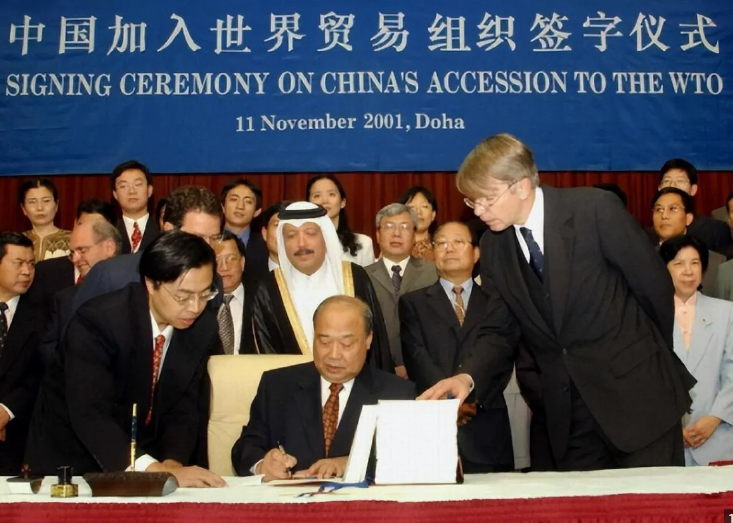
2001年11月11日,中國正式簽署加入世貿組織的協議(圖源:央視網)
不幸的是,情況變了。我們開始討論去全球化,而不是全球化。有些人提出更激進的想法,認為應直接“脱鈎”,斷開雙邊聯繫,價值鏈等。歐洲的態度是,應該用另一個術語“去風險化”,這稍微好一點,雖然仍然是合作的阻礙,但脱鈎就基本上等於開戰了,而“去風險化”不排除在許多議題上展開深度探討。
澳大利亞前總理、現駐美國大使陸克文擔心亞太地區會爆發真正的戰爭。我強烈支持他去年出版的《可避免的戰爭》中提出的概念,就是戰略競爭是可以的,但應該是“管理框架下的戰略競爭”:即便處在對立面,但我們應該保持溝通對話,雙邊關係應該是受控的,因為我們面前有許多全球性挑戰。我們有機會合作並取得成功。
在中東歐,中國—中東歐合作機制是前國務院總理温家寶於2012年在波蘭華沙正式啓動的,我當時親自參加他的演講。那個時代真的不一樣,當時大家對未來潛在的合作、投資和機遇充滿憧憬,一切都是新的,中國也是所有人的新夥伴。然而,這一情況早在2014年就已經發生了變化,東歐17國(觀察者網注:指“中國—中東歐國家合作機制”)之間立場差異愈發明顯。
一些國家保持之前的積極態度,比如匈牙利、塞爾維亞和希臘等,希望深化與中國的經濟合作。但是,也有一些國家,先是波羅的海三國,後有波蘭和羅馬尼亞國,與美國盟友關係越來越緊密,因為對國家安全的擔憂。波蘭的鄰國烏克蘭正處於戰爭狀態,我們因此有一種“戰壕心理”,看問題“非黑即白”,甚至有冷戰思維。
因此,我認為中歐內部沒有任何凝聚的力量,反而有許多不同的力量正在分裂我們。這是為什麼我非常期待第三次“一帶一路”峯會,因為我期待中國將三大倡議——全球發展倡議、安全倡議和文明倡議——結合起來,這過程中或許會產生一些新的東西,甚至因此出現新的倡議。
觀察者網:您在“‘一帶一路’為中波關係注入新動力”智庫媒體對話會上提到,“一帶一路”倡議面臨的一個挑戰是,許多中國企業更願意收購現有企業,而波蘭等國則更希望中國進行綠地投資。您認為雙方能做些什麼來改變投資者的心態或方式?
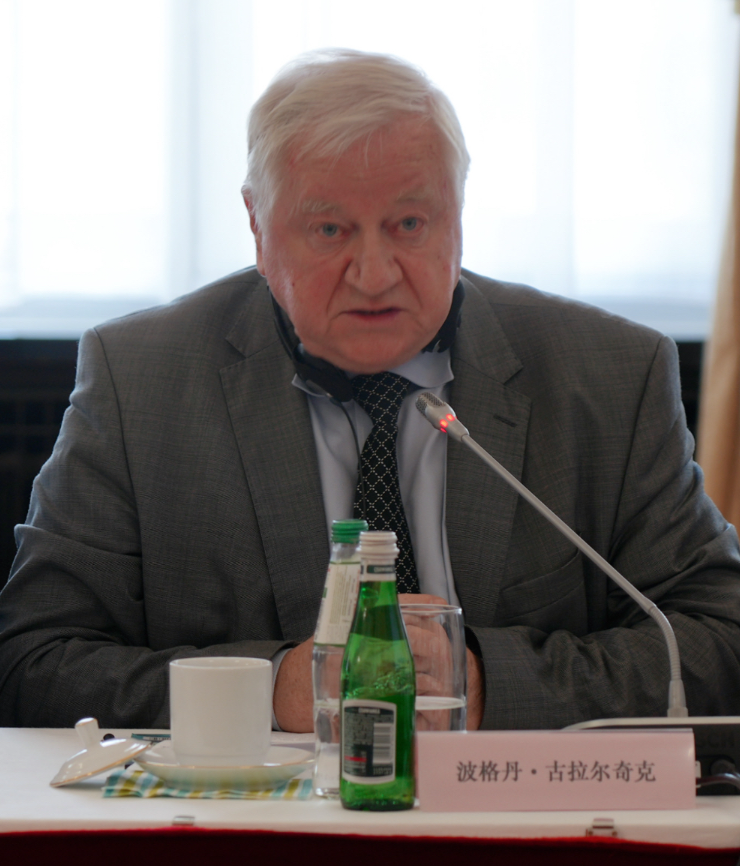
6月26日,古拉爾奇克在“‘一帶一路’為中波關係注入新動力”智庫媒體對話會上致辭(圖源:中國駐波蘭大使館)
**古拉爾奇克:**中波有10年雙邊合作經驗。波蘭的投資者,不管來自哪個地區,都對綠地投資更感興趣,從零開始投資,而不是收購或併購,但至少在過去一段時間內,後者才是中國企業更青睞的方式。中東歐地區整體也更期待綠地投資,比如中國企業在匈牙利建設的電動汽車電池工廠,這是一筆巨大的投資。我們也應該對新提議與項目持開放態度。
當然,雙邊合作也需要考慮兩個新的因素。首先是氣候變化影響,因為這是一個愈發嚴峻的問題。匈牙利工廠項目就凸顯了這一點。我們現在需要清潔能源成為解決方案的一部分。
另一個方面是我們對新冠疫情的記憶。我們十分歡迎中方提出的一些健康倡議。我們需要尋找新的合作議程,中東歐各國肯定也持不同的立場。但波蘭至關重要,因為我們介於俄羅斯和德國之間,而德國與中國的雙邊關係對波蘭來説也非常重要。
德國與中國的“16+1”(觀察者網注:中國—中東歐國家合作機制)中大多中東歐國家都是歐盟成員。因此,投資也需要考慮歐盟的要求,特別是涉及生態、環境和氣候方面的要求。我們期待新的綠地投資。
波蘭還期待繼續推進中歐班列,主要將四川成都等地,通過火車,經過波蘭,抵達德國和西歐。波蘭期待對鐵路系統進行現代化改造。
**觀察者網:**您認為波蘭未來在“一帶一路”倡議中將扮演什麼樣的角色?
**古拉爾奇克:**所有人,特別是中國和東亞地區的觀察人士,都期待着第三次“一帶一路”峯會的成果,我相信到時候會提出一些新的倡議。波蘭現在正深深捲入俄烏衝突,我們是西方各國的重要溝通和交通樞紐。我們期待戰爭結束,到那時,當烏克蘭開始重建並吸納投資時,我們可以與中國開展更多的合作。但此時,衝突雙方都不願意進行談判,想繼續打仗。
最後,波蘭也將受德國出台的中國戰略白皮書的影響,因為德國的舉措肯定會對波蘭方面產生影響。同樣重要的是,波蘭是一個民主國家,已經在為10月中旬的選舉進行競選活動了。波蘭和美國一樣,政治非常撕裂。選舉結果將對波蘭的國際行為產生非常強烈的影響。不過,我們也有黨派共識,即無論選舉結果如何發生什麼,波蘭與美國的關係都將是堅不可摧的,波蘭將一直是北約的忠實成員。
觀察者網:俄烏衝突對“一帶一路”倡議有何影響?通過波蘭的陸上絲綢之路也經過俄羅斯,那麼戰爭對波蘭在“一帶一路”中扮演的角色又有何影響?
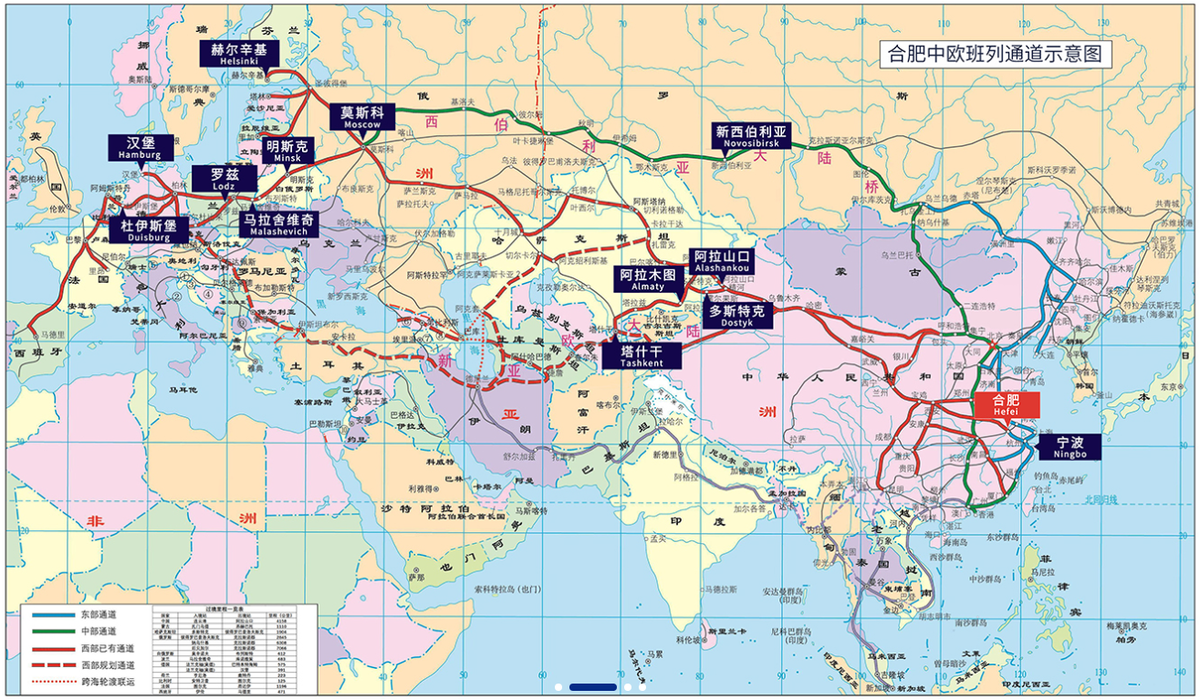
2022年中歐班列線路圖(圖源:百運網)
**古拉爾奇克:**中歐班列是我們與中國雙邊關係非常重要的構成部分。我們很擔心俄烏衝突將對合作構成巨大障礙。中歐班列南線途徑烏克蘭,因此此刻沒有被使用。但幸運的是,中歐班列整體仍在運行,這是因為白俄羅斯沒有直接參戰,在我們兩國的邊境附近,中歐班列最重要的樞紐馬拉舍維奇正在運行中。
我們熬過了最艱難的時期,希望衝突後這扇門能全面敞開。但是,期望值不能太高,因為不幸的是,不確定性無處不在。
觀察者網:波蘭對烏克蘭的支持力度似乎仍有上限,近期甚至暫時禁止了烏克蘭的穀物進口。這是否反映了波蘭出於實際考慮而正在調整立場?
**古拉爾奇克:**現在問題不只是在穀物,還有樹莓。首先,自俄烏衝突開始以來,波蘭已接納了600萬烏克蘭人。其中,至少一百五十萬婦女和兒童留了下來。這是一個巨大的挑戰,因為在這場戰爭之前,波蘭二戰以來一直是個單一民族的國家,超過98%的公民是波蘭人,我們沒有像中國那樣的55個少數民族。這對所有波蘭人來説都是一個新的挑戰,涉及教育系統、勞動力、社會保障系統等,仍有爭議。
幸運的是,到目前為止,波蘭人對烏克蘭人沒有偏見,因為我們意識到這些人是真正的難民,他們真的面臨戰爭,我們需要幫助他們。這也不是政府要求人們做的,而是波蘭公民自發的行為。
其次,波蘭將烏克蘭的利益視為自己的利益。波蘭的戰略傳統認為,沒有烏克蘭的俄羅斯就只是俄羅斯聯邦。但是當俄羅斯再次與烏克蘭合為一國時,它將不再是俄羅斯聯邦,而是俄羅斯帝國,且與波蘭直接接壤。中國有過百年國恥,波蘭則經歷了一百多年被俄羅斯帝國佔領的經歷。我們不希望俄羅斯再次成為一個帝國,出現於我們的整個東部邊境線上。
第三個維度是雙邊經貿關係。就此,我們與歐盟再度有分歧。歐盟想要儘可能獲得更多的烏克蘭糧食和農產品,但這些農產品都氾濫在波蘭的市場上,造成一些令人頭痛的問題。
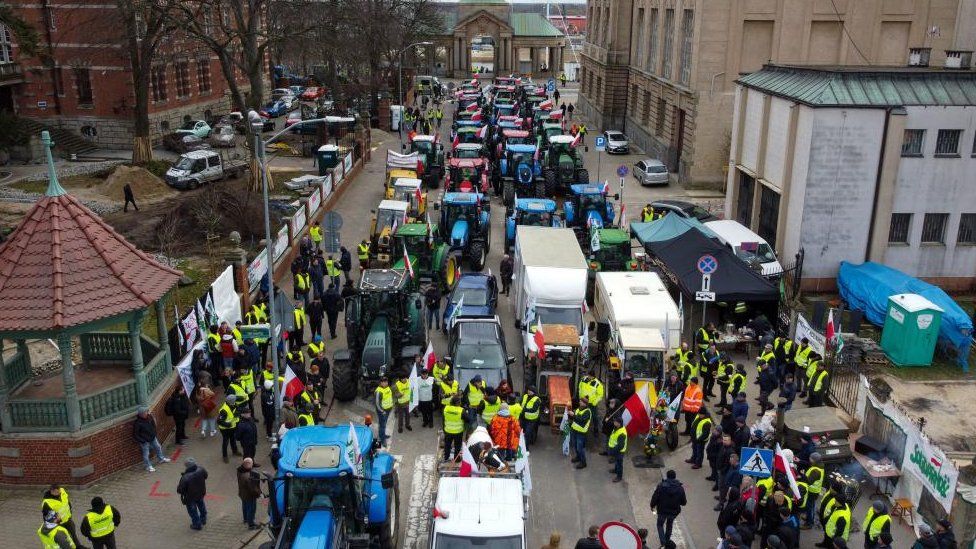
4月,波蘭農民抗議糧價活動(圖源:BBC)
觀察者網:從長遠來看,您認為波蘭應對俄羅斯採取什麼樣的立場?
**古拉爾奇克:**不管發生什麼,我們都將繼續是西方陣營的一員,這也意味着我們與中國的雙邊關係將面臨更多挑戰,因為美國和中國正在進行大國博弈。對於波蘭來説,北約是唯一能保證我們安全的組織,我們無法指望中國或其他國家,比如印度,來給我們提供任何安全保證。在第一個問題中,我曾提到現在全世界正在經歷各方面的“安全化”,波蘭也非常缺乏安全感。不只是我一個人預測波蘭與中國的關係將會不太順利。
但是,我們希望,當俄烏衝突結束後,我們可以重回經貿關係,共同應對氣候變化,探索一些合作領域。正如我所提到的,波蘭與東邊的俄羅斯之間關係斷裂,但西邊的德國正繼續與中國合作。波蘭不支持脱鈎,但可能支持“去風險化”,這個新術語在今年3月開始被啓用,在波蘭也很流行。
中國是波蘭“鄰居的鄰居”,因此根據波蘭人的思維,中國就是我們的朋友,這是波蘭的一個“成語”。我認為,雙邊關係短期內會面臨多重不利因素,但只要俄烏衝突能結束,我對未來還是比較樂觀的。
觀察者網:波蘭一邊要處理與東邊的俄羅斯的關係,一邊與歐盟的關係也並非“完美”,過去經常與匈牙利聯合否決歐盟的某些決定。然而,在俄烏戰爭爆發後,波蘭和匈牙利兩國似乎漸行漸遠。您認為兩國未來能否恢復以前的親密關係嗎?波蘭與歐盟的關係又將如何發展?
**古拉爾奇克:**實際情況要複雜得多。在1990年代,我曾在匈牙利布達佩斯工作過將近十年。波蘭政府與匈牙利政府的做法區別較大。匈牙利總理歐爾班已就任13年,在2010年當選後不久,幾乎立刻宣佈“東方開放”(Keleti Nyitás)政策,意思是與俄羅斯、中國、中亞國家、印度、日本(如果可能的話)開展夥伴關係,但主要是中國和俄羅斯。他正在延續這一政策。
在最近舉行的維爾紐斯北約峯會上,歐爾班在多項問題上持有的反對立場,也有別於歐盟其他任何國家。在俄烏衝突背景下,歐爾班在繼續推行這一政策,造成匈牙利與波蘭之間的重大立場分歧。
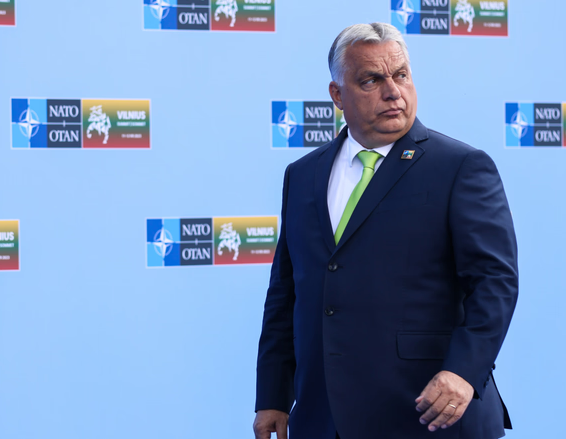
歐爾班出席維爾紐斯北約峯會(圖源:波蘭通訊社)
因此,就北約框架下的安全問題上,匈牙利、波蘭、捷克和斯洛伐克四個國家組成的維謝格拉德集團四國合作機制已陷入停滯。
但另一方面,在維爾紐斯北約首腦峯會的前一週,歐盟也有過一次首腦會議。在歐盟峯會期間,波蘭和匈牙利在難民和其他一些問題上與歐盟整體持不同的意見。因此,就歐盟議題而言,波蘭仍然像過去一樣與匈牙利繼續合作,歐盟一直稱兩國都“沒有遵守法治”。
這一局勢至少將維持到波蘭今年十月的大選,因為民意調查顯示執政黨和反對黨都有可能獲勝。
總的來説,波蘭和匈牙利一邊有分歧,但同時仍在合作。不過,總得來説,維謝格拉德集團四國合作機制運行不太順利。我之前提到的中國—中東歐國家合作機制也是如此,中東歐地區各國之間分歧的力量比較大。
我也希望能推動合作,但我擔心合作在短期內是不現實的,因為現在存在“文明衝突”,“用拳頭説話”的國際政治環境,以及修昔底德陷阱——據我所知,格雷厄姆·艾利森的書在中國也很知名。在當下強權政治的國際環境下,匈牙利與波蘭的立場截然相反,匈牙利的安全觀與波蘭完全不同。
在北約內部,歐爾班與土耳其總統埃爾多安關係緊密,以至於他此前一直在等待土耳其就是否批准瑞典加入北約做出決定,埃爾多安最終宣佈將批准瑞典的申請後,歐爾班才跟進。
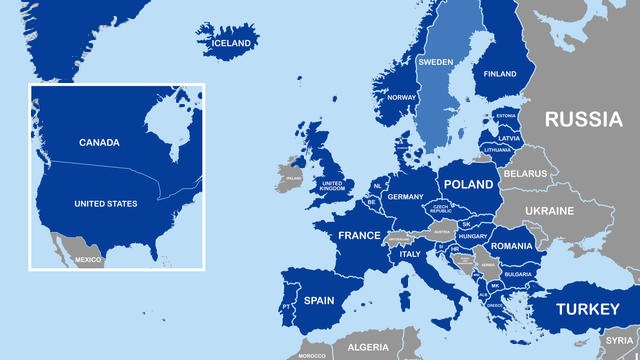
北約成員國地圖,淡藍為即將加入的瑞典(圖源:CBS新聞)
我認為波蘭與匈牙利的關係未來可能進一步惡化,尤其是如果反對派在10月大選中獲勝,因為波蘭的反對派不僅支持美國,也支持歐盟,與匈牙利和現任波蘭政府的態度相反。
需要注意的是,實際上並不存在一個所謂的“波蘭立場”。波蘭立場是什麼,取決於你的政治理念,在同一個問題上,不同人會有截然不同的答案。當然,波蘭兩黨都支持北約以及與美國的聯盟,但就波蘭與德國、法國、西歐、歐盟等關係,波蘭黨派之間又有分歧了。
觀察者網:讓我們談談歐盟對中國的態度。歐盟對中國的態度似乎是存在一定矛盾的:一方面將中國定位為系統性競爭對手,並強調要“去風險化”,另一方面希望促進經貿合作。這兩種立場能否共存?歐洲最終會有一個統一的對華戰略嗎?
**古拉爾奇克:**歐盟也承認,自己沒有統一的立場,不同的國家、不同的政黨,就有不同的看法和態度。在我看來,德國和法國對華的看法,對中國和中波雙邊關係是至關重要的。此外,法國總統馬克龍強烈支持與華關係,這也在波蘭和歐洲引發了一定爭議。
德國最近發佈了首個對華戰略書,因為對我來説,這將是一個指南針,告訴我們中歐關係下一步將如何發展。初步看來,白皮書更加強調競爭和對手關係,意味着中歐關係將變得更加困難。
有些人説,中國是歐盟的系統性競爭對手。既然我們是民主國家,就會有五花八門的聲音,有人會説中國是合作伙伴,有人説中國是我們問題的“解決方案”,有人説中國是競爭對手,有人説中國是挑戰,甚至有人説中國是威脅。
我深信,因為俄烏衝突,德國和法國都失去了俄羅斯市場,而北溪一號和二號也不再存在了。單憑這個原因,德國和法國,甚至一定程度上包括意大利和西班牙,都無法割捨同中國的貿易和商業關係。既然他們已經失去俄羅斯市場,他們就不能失去中國市場了。因此,我比較樂觀,認為中歐可以在一定框架內繼續合作。
以下為部分英文采訪原文:
Guancha: You had mentioned in June that the emphasis of the world no longer seems to be purely “it’s the economy, stupid”, as the concept of “security” increasingly takes center stage. How is this trend manifested around the world, and what does this mean for global trade and globalization?
Goralczyk: In at least the previous three decades, all of us, citizens of Poland or European Union, also mainland China, we were, like it or not, under the one slogan, “it’s the economy, stupid”. Some people in China even say that it was “拜金主義”, but this is another story about corruption.
But we were under the dominion of market forces, open markets, globalization forces. After recent events and experiences, mostly the Covid pandemic, and recently what China is calling the Ukrainian crisis, we have a new situation, and the demand and the challenge is growing. We are already under another slogan, another banner: “it’s the security, stupid”.
This is both in European Union and in China. When I see your documents, you have probably 20 or more securities to fight for. So you have food security, water security, energy security, fossil fuel security, space security, cyber security and so on and so forth. In this respect, we are living once again, both in China and the European Union in “新時代”, because we have security as the most demanding issue on our daily agenda.
On the one hand, this is a tremendous challenge, it is a problem, it is a hardship in our bilateral relationship of Poland and China for instance. On the other hand, this is a chance for us to start to talk seriously, to start in depth debates, what we can do together concerning climate, environmental issues, for instance, because environment and climate doesn’t recognize borderlines between the countries, between states. We need to do something together.
In 1999, Organization for Security and Cooperation in Europe defined a new term, a cooperative security that we have so called global challenges, challenges for the whole humankind. Doesn’t matter if you are Chinese, American or European. And in this respect, we need to find a common solutions. We have no other choice. Mr Kerry is coming to Beijing. We need to send a special representatives of the European Union because climate is definitely the issue we can find together. Environmental issues are also very important in this respect.
Guancha: You and other scholars have stressed that we face an era of global challenges that require global solutions. Some scholars argued that we are in an era of “de-globalization”, with increased tensions and barriers erected between countries. Some argued that BRI is the right path to a new globalization. what is your take on this, and why? What do you think are practical mechanisms and solutions for solving these global challenges?
Goralcyzk: For a long time, at least since 1990s and Francis Fukuyama’s famous “The End of History”, we were under the globalization forces’ dominion. China was going a little bit differently due to Deng Xiaoping saying “韜光養晦”, this was a little bit different than all the western word. But still, China was, under Prime minister Zhu Rongji, very strongly engaged in the global marketization, global forces. And China joined in 2001 WTO. So you were also part of this process.
And unfortunately, like it or not, the situation, the circumstances has changed. We had unexpected and very harsh experience with the Covid Pandemic, and right now, we have a real war, unseen since the Second World War, very close to Polish borders. In this respect, we are starting to talk about the de-globalization, not globalization. And some people say that we should go even farther to decouple, to close our connections, connectivities, value chains and so on.
However, I suppose that the Western European approach recently observed that instead of decouple, we should use another term. De-risking is a little bit better. It is still an issue. It is still a problem, it is still a challenge for both sides. However, decoupling is almost a direct war. De-risking is not excluding a dialogue, in depth dialogue of many issues.
I’m quoting Kevin Rudd, former prime minister and foreign Minister of Australia, currently since this year, ambassador of Australia to the US. Surprisingly but not surprisingly for me, he is afraid of a real war in Asia Pacific. In his recent volume, “The War is Avoidable”, he is proposing strategic competition, but managed strategic competition, for which I am voting for, me personally as Bogdan Goralczyk. We are on the opposite sides, but we should continue our dialogue and it should be manageable because we have many global challenges in front of us. And here we have a chance to cooperate and be successful on both sides.
China - Central and Eastern Europe Cooperation, as we know, it was inaugurated by the former prime minister Wen Jiabao in 2012 here in Poland, in Warsaw. I was personally attending his speech at that time. We were in a different time because it was expectation of the new engagement, new involvement, new investment, new opportunities. Everything was new. And China was also a new partner for all of us. However, already in 2014, this situation has changed and we have more and more discrepancies because we have differentiation between the 16 or 17.
On the one hand, you have those countries which are following the footsteps of the previous era, namely Hungary, Serbia, Greece, which are open for further economic cooperation with China. On the other hand, especially the three small Baltic states but followed by for instance, Poland and Romania, we are more and more close allies of the United States of America because of the security reasons. Like it or not, we have a real war on our immediate neighborhood here in Poland. And we have a war mentality, black and white scenarios here. We have Cold War approach.
From this perspective, I do not see any convergence forces inside of Central Europe. I see a lot of divergent forces which are splitting us, dividing us. And for this reason, definitely I am the person who is strongly waiting for the 3rd summit meeting of Belt and Road Initiative, because I’m expecting personally that China will combine your recent three Big Initiatives, Development Initiative, Global Development Initiatives, Security Initiative and Civilization Initiative, and maybe as a merger, as a fusion, something new will emerge and maybe you will have a new proposal.
Guancha: One challenge that the BRI faces, as you noted, is that a number of Chinese firms prefer to take over existing firms, while Poland and other countries would much rather China make brand new investments. What do you think both sides can do to change the mindset or the method of investment?
Goralcyzk: As we have 10 years of experience of our mutual bilateral cooperation, it is visible that our investors, doesn’t matter which part of our region, are more interested in so called green field investments, with the investment starting from the very beginning, instead of fusion and mergers, which were at least for some time a preferable solution by the Chinese side. So we have a different approach. And definitely here in Poland but also in our region, we are rather expecting some new investment.
You propose something right now in Hungary, for instance, this electric car batteries factory, which is a huge investment. Definitely, we need to be open for the new proposals. And when you propose something, even the new investment, we need to include two new dimensions into our corporation. First is climate change expectations, because this is a real story and growing and demanding. On the other hand, this is the case of Hungary right now already with this new investment, ecology and environmental issues. Clean energy is needed and we are expecting something from the clean energy sector to be a part of the solution.
Another dimension is taking into account our harsh memories from the last time, namely the Covid Pandemic. Some health initiatives in the health sector is also definitely welcome from the Chinese side. We need to search for the new agenda of our cooperation. And here definitely there will be some different approaches from the countries in our region. However, Poland is crucial because we are between Russia and Germany. And definitely what Germany will do in a bilateral relationship with China is also very important for us.
And of course, most of the 16+1 Central and Eastern European partners of China are the members of the European Union. So their requirements, especially ecological, environmental and climate requirements of the European Union need to be taken into account as well.
We are open here in Poland also for continuation, we have trains connection with Sichuan, Chengdu, and it is mostly going through Poland on the land, and going to Germany and Western Europe. Here we are also open and we are ready for modernization of this sector.
Guancha: What do you think will be Poland’s place in the BRI going forwards, given both the challenges and opportunities that we have discussed?
Goralcyzk: Everyone, especially the observers of China and East Asia region is expecting the results of the BRI 3rd Summit. I am convinced that there will be some new proposals. Poland is as a country right now deeply engaged and involved into the war in Ukraine. We are very important connection, communication, transportation hub for all western partners, Western European, NATO member states and also US. This is all obvious. So what I would say that we are expecting the end of war on our neighborhood. And at that time, when Ukraine will start hopefully to be renovate it again and start to be reinvested, we can do something more with China. During the war, our openness is narrow because we are under this mentality of Cold War and war mentality.
Second, when will the war end in Ukraine? We hope that as soon as possible. But as we see, both sides of the conflict are not declaring that they are open for negotiations. They are ready to fight. Unfortunately, both Russians and Ukrainians. So we don’t know when they the war will end.
And finally, we are expecting also here in Poland the new Germany strategy towards China. Much of Poland’s trade volume is with Germany alone. So what Germany is doing will have an impact on Polish side, definitely. And finally, last but not least, Poland is as a democratic country, we are already in election campaign. We will have a new elections in mid of October. And Poland is like US, strongly polarized. We are divided also. It will have a very strong impact on our international behavior.
Guancha: What has been the effect of the Russia-Ukraine War on the BRI, especially Poland’s place in it, given that parts of the railway passes through Russia?
Goralcyzk: I already mentioned about this railway. We understand, at least those who are engaged in international affairs, that this is a very important aspect of our bilateral relationship with China, these trains. We were openly afraid that the war and Russian engagement, Ukrainian engagement, will be an enormous obstacle for this cooperation.
In the case of Ukraine, it is partially. So the southern lines of these trains are not working. But fortunately, the trains are mostly still going, because Belarus is not engaged directly into the conflict yet, so we have direct connection with Belarus. And on the borderline, the most important hub, Małaszewicze, is open. So we survived the most demanding times. And let’s hope that we will have these open gates after the war. During the war, you cannot expect too much because the uncertainty is everywhere, unfortunately.
Guancha: It seems that Poland’s support for Ukraine is still with its limits, even temporarily banning Ukrainian grain imports a few weeks ago. Does this reflect an evolving of its broader position, in response to practical concerns?
Goralcyzk: You are asking me about the problems with Polish relationship with Ukraine, and you mentioned grain. We have not only grain, we have raspberry right now. But I will define it a different way. First of all, what is important and what should be shared also with the Chinese audience, Poland is the country which absorbed more than 6 million Ukrainian inhabitants. Since the beginning of the crisis management situation, more than 6 million Ukrainians crossed our borders. At least one million and a half out of them, many women and young children are staying.
This is a tremendous challenge because Poland, until this war, was homogeneous country. More than 98% of the citizens were Polish. We have no 55 minorities like in a People’s Republic of China. We have right now finally a minority like prior to the Second World War.
And this is a new challenge for all of us, for our educational system, for our working force, for our Social Security net. And we have a debate. Fortunately, until now, we have no prejudice towards the Ukrainians because we realize that those are real refugees, that they are really fighting and we need to help them. And it was not government initiated proposal. It was bottom up behavior of Polish citizens. We have shown again that Poland is the cradle of Solidarity. And this is the most important thing in our relationship with Ukraine.
Secondly, we are fighting for Ukrainian interest like for our own. We have polish strategic tradition which says as follows: Russia without Ukraine, Russia separated from Ukraine is Russian Federation proper. But when Russia will be united with Ukraine again, it will be not Russian Federation, it will be Russian Empire again on our borders. You have “百年國恥”, or 100 years of humiliation. We have more than 100 years of invasions by the Russia as the Empire. And we would like not to have Russia as an empire, as an our immediate neighbor on the whole borderline.
And finally, the third dimension is our bilateral trade. Here we have discrepancies, again, division lines because we have European Union policy. European Union as an independent player is mostly trade, where it is a big power. On the other hand, it is soft power. But in this respect, we need here in Warsaw, here in Poland to adjust ourselves to the requirements of the European Union. And sometimes it doesn’t work because European Union want as much as possible the Ukrainian Grains, Ukrainian fruits, food items, agriculture items, while Poland is invaded by them and has some headaches, some problems because of this.
Guancha: In the long term, what do you think Poland’s position towards Russia will be?
Goralcyzk: We will remain, whatever happens, a part of western alliance, which means that our bilateral relationship with the People’s Republic of China will be more demanding and more difficult, because I realize that we have clash of powers, big power clash between the US and China, like it or not. And we see US And NATO as the only security guarantee. We cannot expect that China or someone else, India, for instance, will come and give us any security guarantees.
In my first response to your first question, that we have security surrounding us in all aspects, in all dimensions, we are feeling ourselves insecure. And for this reason, I am predicting and I am not alone, definitely not, that our relationship, bilateral relationship with Chinese Mainland will be troubled. But we hope that when the war will be over, we can go back to our trade relationship, to climate change. We can specify some issues, some dimensions, some fields of cooperation. And as I mentioned, we are still closed on the one side with Russia, but on the other side with Germany. And Germany, as you know, is trying to be engaged. Now, we are not for decoupling, we are maybe for the de-risking. Yes, this is a new term, as you know, from March this year, very fashionable also here in Poland.
We should avoid something strange. And China is neighbor of our neighbor. So by definition, you are our friend, neighbor of our neighbor is our friend. This is a Polish 成語, if you wish. In this respect, I am predicting some obstacles, barriers and hardships, but I’m rather optimistic on one condition: let’s stop the war. Let’s stop the fighting.
Guancha: Poland used to frequently join with Hungary to veto certain decisions by the EU. However, it appears that the two have increasingly drifted apart after the start of the Russia-Ukraine War. Do you think the two will return to its previously close relationship? What about Poland’s relationship with the EU?
Goralcyzk: Here situation is much more complicated than in your question. I spent almost a decade of 1990s in Budapest, Hungary. And from this perspective, we see, and you see even from Beijing or Shanghai, that Polish authorities and Hungarian authorities are behaving themselves differently. Mr Orban, who led the country for some 13 years when he came to his strong power in 2010, almost immediately declared so called Keleti Nyitás or the eastern Bound, the Eastern Partnership, meaning partnership with Russia, with China, Central Asian states, also India, Japan if possible, but mainly China and Russia. And he is continuing this policy.
As you see even the in recent summit meeting in Vilnius, his opposition was different than all the others from the European Union. So when the clash and war and crisis situation has happened between Russian in Ukraine, Mr Orban is continuing this policy and we have a clash between Budapest and Warsaw. We are on the opposite side of the barricade, we are ally within NATO in Warsaw, while Mr Orban is continuing his cooperation with Mr Putin and Russian Federation. So in a security dimension concerning NATO, a Visegrad cooperation of four countries, Hungary, Poland, Czechia and Slovakia is in a refrigerator. It is frozen.
But on the other hand, prior to the Vilnius NATO Summit meeting, a week before, we had a EU summit meeting. During the EU summit meeting, Poland and Hungary together had different opinion concerning refugees and some other issues than the European union, European institutions starting from commission and the parliament. So when the European integration is concerned, Poland is still cooperating as previously with Mr Orban because both countries are not observing, according to the authorities in Brussels, the dimensions and demands of the rule of law. So we have a problem with the European Union. And here we have a common position, at least until the election in Poland in mid October, because public opinion polls shows that nobody knows who will be the winner.
In this respect, I would say that Poland and Hungary on one side have split, on the other side are still cooperating. But altogether combined, Visegrad is not working well, like 16+1 also collapsed to some extent because I mentioned to you in one of my previous answers that we have these divergent forces and differentiation between the states in our region.
I would like to have close cooperation, but I suspect that it is impossible as for now, because we have this clash of civilizations, we have a hard power politics, we have a structural Thucydides trap (as far as I know, Graham Allison books is also popular and known in China). We have a power politics and in this respect, Mr Orban is in the opposite side. He sees his security different way than Poland. Within NATO, Mr Orban is strictly linked for instance, with Recep Erdogan, with Turkey to such an extent that his he was expecting what Turkey would do with the NATO membership of Sweden, as you know. And when Erdogan finally declared that Turkey will allow Sweden to participate and be a member, only then did Mr Orban follow the footsteps. But we are still waiting for the voting in Hungarian parliament, which will not take place definitely during the summer season, only later this year in autumn. And you who knows what will happen in two or three months time. We have a very dynamic situation in our immediate neighborhood. In this respect, I’m rather expecting turbulent relationship, especially if the opposition wins, because Polish opposition is not only pro US, it’s also pro EU, while current Polish government and Mr Orban have a lot of headaches, a lot of problems unresolved and a lot of barriers with the European Union.
By the way, when you are asking a question like this, be careful not to say a Polish side. There’s no Polish side. It depends to which political tribe you belong to. And you will have on the same question very different answers, maybe with the exception of NATO and US alliance, but all the others, especially relationship with Germany, with France, with Western Europe, with the European Union, with even trans-Atlantic relationship. Here you have divergence again.
Guancha: Let’s talk about EU’s approach towards China. It seems to me that EU, not necessarily dividing between west and east, has contradictory approaches dealing with China: de-risking and positioning China as systemic rival on one hand, promoting trade and economic cooperation on the other, can these two approaches coexist? Will Europe have a coherent strategy at the end of the day?
Goalcyzk: You have no unified European Union. You have different countries. You have different political parties, you have different opinions, you have different attitudes. To my mind, what is crucial for China and also for our bilateral relationship is the final answer of Germany and France, what to do currently with relationship with China. As you know, Mr Macron is strongly supporting it, which was a reason for big debate here in Poland and in Europe.
Germany prepared its first strategy towards China. For me, it is a kind of a compass, a strategic direction what to do next.
I’m deeply convinced that, like it or not, due to the recent events, especially on the Ukrainian territory, both Germany but also France lost Russia as a market, Nord Stream does not exist anymore, and for only this reason, both Germany and France and partially even Italy or Spain, they cannot just manage to lose strong trade and business relationship with China. When the Russian market is lost, Chinese market cannot be lost. So I am quite optimistic here in this respect. I am expecting some kind of engagement, but conditional, partial. As you know, some people say that China is our systemic rival, we are democratic countries. One person will say China is a partner, China is a solution. China is a competitor, China is a challenge. For some even China is a threat. And we have different opinions here.
本文系觀察者網獨家稿件,文章內容純屬作者個人觀點,不代表平台觀點,未經授權,不得轉載,否則將追究法律責任。關注觀察者網微信guanchacn,每日閲讀趣味文章。
